Adapting Payment Processing for Temporary Retail Setups: Challenges in Secure Transaction Handling and Compliance
Written by Rosa Hansen · Aug 18, 2026
Adapting Payment Processing for Temporary Retail Setups: Challenges in Secure Transaction Handling and Compliance
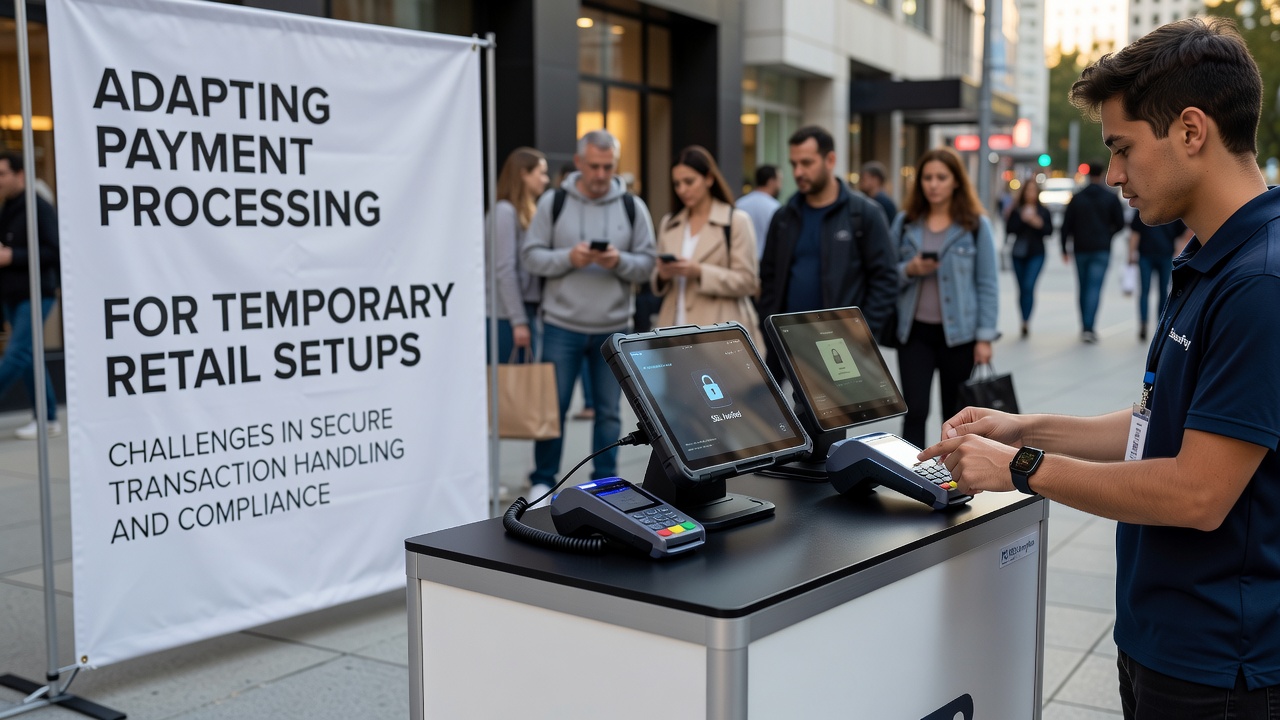
Temporary retail setups such as pop-up shops, festival stalls, and seasonal markets have expanded rapidly in recent years, and these operations rely on portable payment devices to process transactions in environments that lack fixed infrastructure. Data from industry reports indicate that such locations often experience variable network connectivity, which can complicate the transmission of card details and increase exposure to interception attempts during August 2026 events across multiple regions.
Core Security Challenges in Mobile Environments
Secure transaction handling in these contexts begins with the protection of cardholder data at the point of capture, yet portable terminals must operate under conditions that include dust, temperature fluctuations, and shared power sources. Researchers have documented that encryption protocols applied at the device level must align with standards maintained by the PCI Security Standards Council, which requires end-to-end protection even when devices connect intermittently to cellular or Wi-Fi networks. Observers note that signal interruptions can force fallback procedures that sometimes store data temporarily in unencrypted buffers, creating brief windows of vulnerability before synchronization resumes with central processors.
Those who manage high-volume periods at temporary locations report that physical security of hardware also becomes relevant, because unattended terminals at crowded venues face risks of tampering or theft. Studies on device-level authentication show that biometric or PIN-based access controls reduce unauthorized use, while regular firmware updates address newly identified exploits that target mobile payment applications. In August 2026, several large outdoor events implemented centralized device management platforms that allowed remote locking of terminals when network anomalies were detected, thereby limiting potential data exposure.
Regulatory Compliance Requirements Across Jurisdictions
Compliance frameworks impose additional layers of obligation on operators of temporary retail. The Payment Card Industry Data Security Standard sets baseline technical controls, whereas regional regulations add requirements for data residency and breach notification timelines. Figures from Payments Canada reveal that merchants handling cross-border transactions during seasonal markets must maintain logs that satisfy both domestic and foreign reporting rules, which often necessitates dual-audit trails within the same portable system. European operators reference the revised Payment Services Directive for strong customer authentication mandates that apply equally to fixed and mobile environments.
One study of North American pop-up retailers found that integration between handheld terminals and inventory systems must preserve compliance boundaries, so that transaction data does not leak into non-secure applications during real-time stock updates. When devices operate in areas with limited connectivity, scheduled batch uploads become necessary, and these batches must still meet encryption standards to avoid penalties under applicable data protection statutes.
Operational Adaptations and Technical Integration
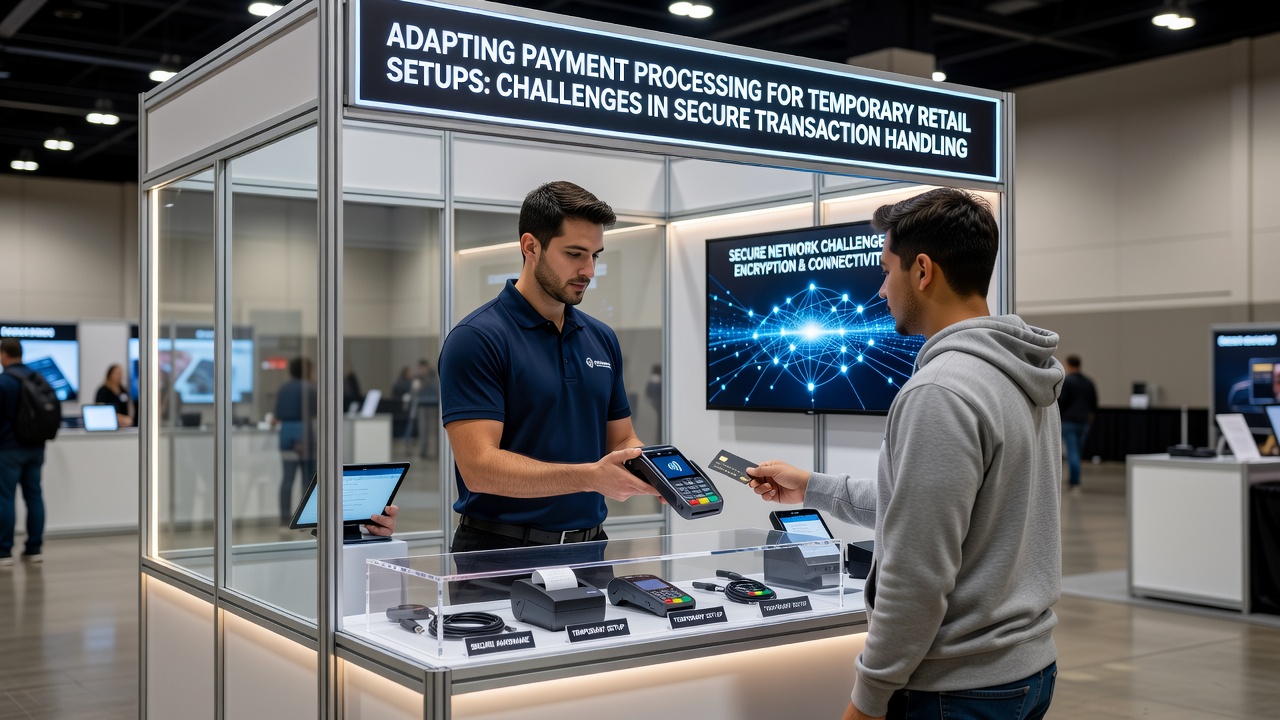
Merchants address these constraints through layered security architectures that combine tokenization with device-level encryption. Tokenization replaces primary account numbers with unique identifiers that hold no value if intercepted, and this approach has gained traction in temporary setups where physical device loss remains a documented possibility. According to data released by the Australian Payments Network, adoption of tokenized mobile payments at outdoor markets rose notably during the 2025–2026 summer season, correlating with reduced instances of account compromise reported to financial institutions.
Connectivity challenges receive attention through hybrid network strategies that prioritize cellular connections while maintaining fallback to local caching with immediate encryption. Experts have observed that software-defined wide area networks deployed on portable routers can prioritize payment traffic over other data flows, thereby shortening authorization windows even in congested festival environments. In August 2026, several organizers of large-scale events partnered with telecommunications providers to install temporary cell towers specifically calibrated for point-of-sale reliability.
Inventory synchronization tools must interface with payment gateways without compromising compliance boundaries. Systems that separate transaction authorization from stock-level updates allow merchants to maintain accurate records while ensuring that card data never traverses unsecured pathways. Research indicates that application programming interfaces configured with mutual TLS certificates achieve this separation effectively, and such configurations appear in case studies of vendors operating across multiple temporary sites within a single trading day.
Fraud Prevention Measures Specific to Transient Locations
Fraud detection in temporary retail incorporates velocity checks that flag unusual transaction patterns originating from a single device or location. Because these setups often serve transient customer bases, traditional geographic risk scoring requires adjustment to account for short-duration operations rather than permanent store footprints. Organizations such as the European Central Bank have published guidance on adapting fraud monitoring parameters for mobile commerce, emphasizing real-time alerts that reach on-site staff through secondary channels when anomalies surface.
Staff training programs emphasize recognition of skimming devices and verification of terminal integrity at the start and end of each trading period. Data collected by industry associations show that routine physical inspections combined with digital checksum verification reduce successful tampering attempts. Temporary retailers also employ dynamic currency conversion safeguards that prevent mismatches between displayed prices and charged amounts, thereby lowering dispute rates that could otherwise trigger compliance reviews.
Conclusion
Adaptation of payment processing for temporary retail continues to evolve through coordinated technical, procedural, and regulatory responses. Portable terminals now incorporate stronger encryption defaults, remote management capabilities, and tokenized data flows that address both security and compliance demands. As seasonal markets and pop-up operations expand in August 2026 and beyond, the integration of these measures with existing inventory and connectivity frameworks supports continued transaction integrity across variable environments.