Analyzing Settlement Cycles and Their Effect on Working Capital for Small Scale E-commerce Operators
Written by Jakob Schmitz · Aug 23, 2026
Analyzing Settlement Cycles and Their Effect on Working Capital for Small Scale E-commerce Operators
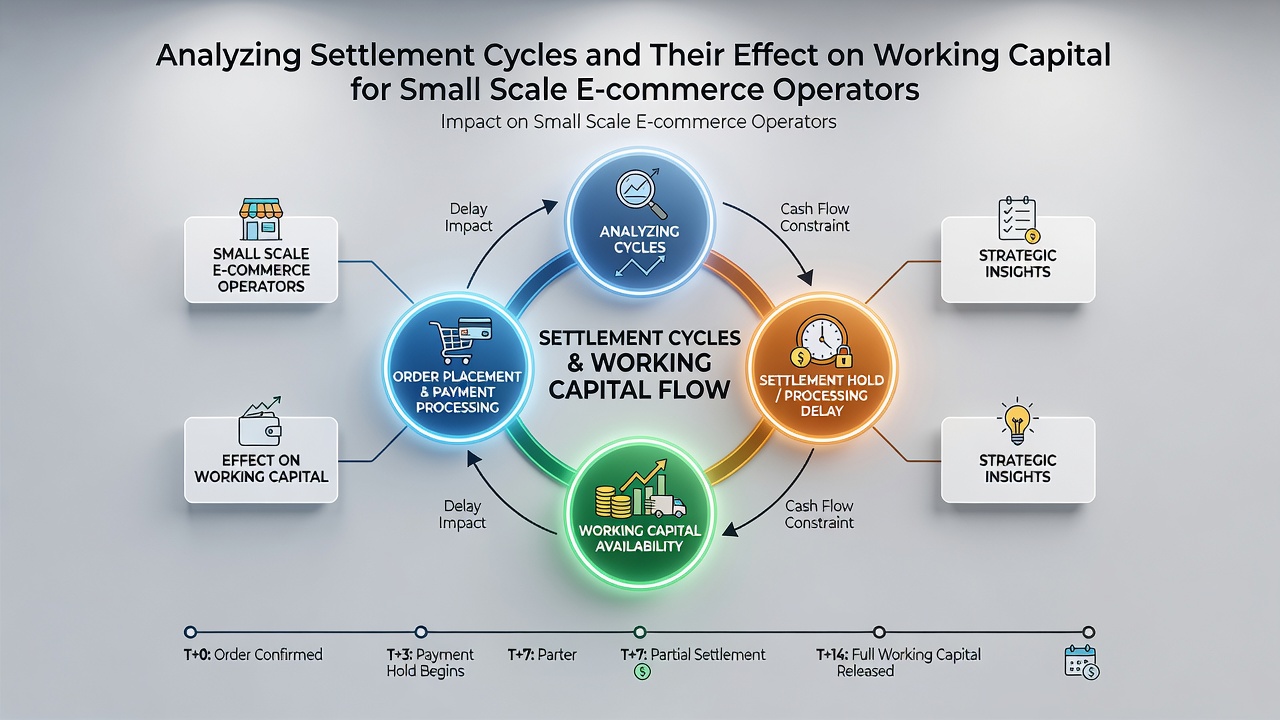
Settlement cycles determine how long it takes for funds from customer payments to reach merchant accounts after an online sale closes, and this timing directly shapes cash availability for small scale e-commerce operators who rely on steady inflows to manage inventory purchases and operational expenses. Standard cycles often run from one to three business days depending on the payment processor and card network involved, while some arrangements extend to five days when additional verification steps occur during high volume periods. Data from payment system analyses show that these delays create gaps between revenue recognition and actual cash receipt, which forces operators to draw on reserves or short term credit to cover supplier payments and marketing costs.
How Settlement Cycles Function in E-commerce Transactions
Payment processors collect transaction details at checkout and then route authorization requests through card networks before initiating the settlement phase that moves cleared funds into merchant bank accounts. In many cases the process begins with batch submissions at the end of each business day, after which the processor holds funds for risk assessment and reconciliation procedures that conclude on the next business day or later. Observers note that electronic payment rails such as ACH transfers or wire options can shorten these windows, yet small operators frequently default to standard card settlement paths because they integrate more easily with existing storefront platforms.
August 2026 marks the scheduled rollout of updated faster payment guidelines in several regions that aim to compress average settlement times for qualifying transactions below the current two day average. Research indicates that operators who adopt these updated rails report reduced float periods, although adoption rates remain uneven across smaller businesses that lack dedicated treasury staff to manage the technical integration.
Direct Effects on Working Capital Management
Working capital represents the difference between current assets and current liabilities, and prolonged settlement cycles reduce the asset side by keeping receivables in limbo until funds clear. Small scale operators often maintain lean balance sheets where even a two day delay on daily sales volumes of several thousand dollars can create measurable shortfalls in available cash for restocking popular items or paying recurring platform fees. Figures from industry reports reveal that businesses with settlement times averaging three days or more show higher reliance on revolving credit lines to bridge gaps, which in turn raises interest expenses that further erode net margins.
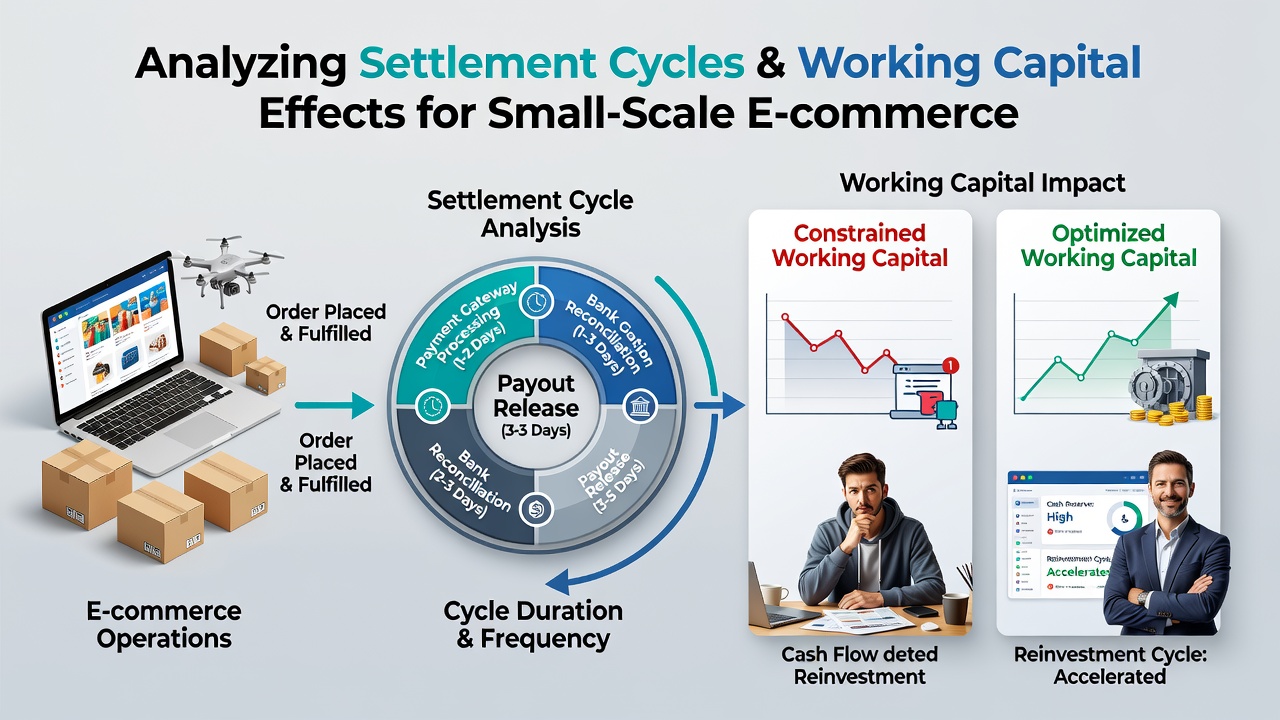
Take one retailer who noticed inventory orders delayed because cleared funds arrived after supplier payment deadlines had passed, prompting a shift toward processors that offered next day funding at a modest fee increase. Studies found that such adjustments improved stock availability during peak seasons without expanding overall credit usage, although the fee structure required careful comparison against baseline processing costs. Those who've studied cash flow patterns across multiple operators observe that settlement variability spikes during holiday surges when processors apply extra fraud reviews that extend hold periods by an additional day or two.
Regional Variations and Emerging Standards
Payment frameworks differ by jurisdiction, with the Federal Reserve documenting average settlement speeds for card transactions in the United States that contrast with faster instant options available through certain European networks. In Australia the payments council has published data on real time settlement pilots that allow eligible merchants to access funds within hours rather than days, reducing the working capital strain that arises when daily sales volumes fluctuate. Canadian banking statistics similarly highlight how small businesses using integrated banking platforms experience shorter reconciliation times compared with those relying on standalone processors.
Operators who track these regional differences can select processors that align settlement windows with their supplier payment schedules, thereby minimizing the need for interim financing. Evidence suggests that businesses operating across multiple markets benefit from unified dashboards that display expected deposit dates alongside transaction records, which supports more accurate cash forecasting models.
Practical Considerations for Small Operators
Inventory turnover rates suffer when settlement delays prevent timely replenishment of high demand products, and case studies of e-commerce stores show that those maintaining buffer stock funded through credit face compounded costs during periods of extended cycles. Processors sometimes offer accelerated settlement as an add on service, yet eligibility often hinges on transaction volume thresholds or risk profiles that exclude newer or lower volume merchants. Data shows that operators who segment their sales channels by payment method can route higher value orders through faster settlement options while accepting standard cycles on smaller transactions to control overall fees.
What's interesting is how seasonal patterns interact with these cycles, since end of quarter reporting deadlines sometimes coincide with slower settlement windows that amplify cash shortfalls for operators preparing tax or financial statements. Researchers discovered that maintaining rolling forecasts updated weekly helps identify potential shortfalls before they affect supplier relationships or advertising budgets.
Conclusion
Settlement cycles exert measurable influence over working capital by controlling the speed at which sales convert into usable funds, and small scale e-commerce operators navigate these timelines through processor selection, channel segmentation, and forecast adjustments. Regional payment frameworks continue to evolve with faster options emerging in 2026 that may narrow the typical gaps, while data from regulatory bodies across different markets provide benchmarks for comparing available services. Those who monitor deposit timing against operational needs position their businesses to sustain inventory levels and meet obligations without unnecessary financing costs.