Balancing Currency Conversion Fees Against Processor Timelines for Global Merchant Accounts in Emerging Markets
Written by Devon Braun · Jul 30, 2026
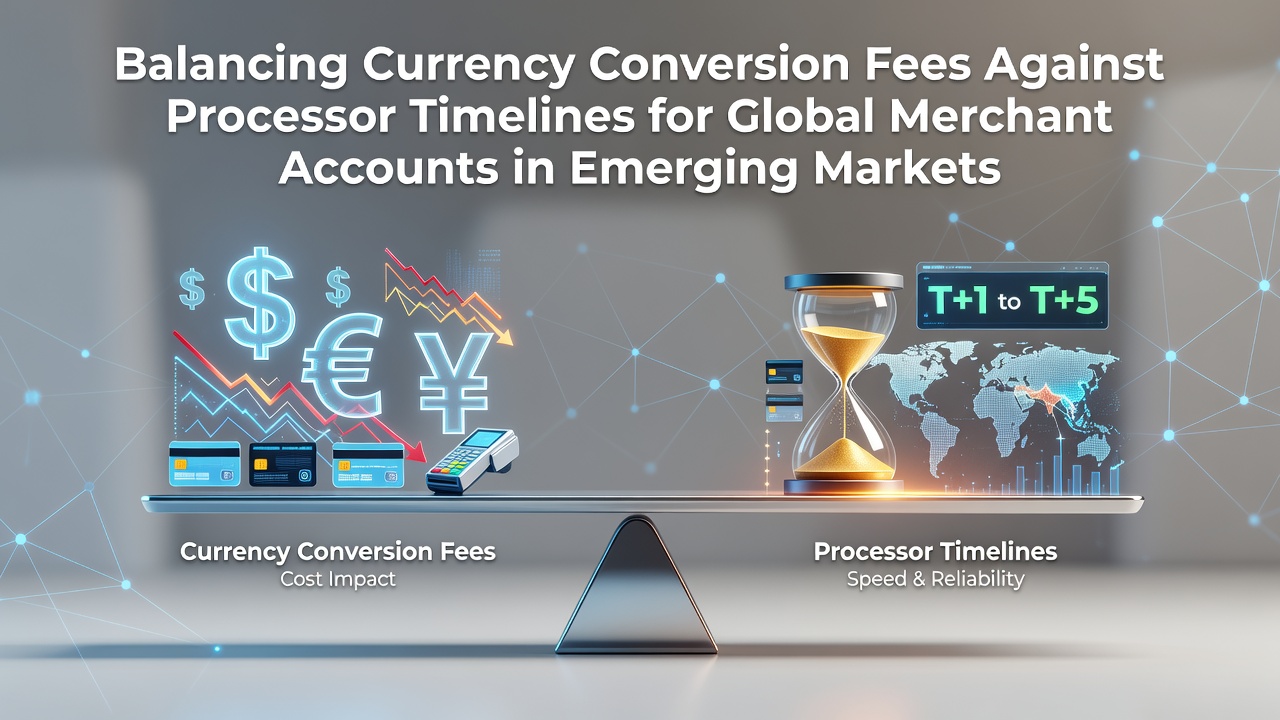
Balancing Currency Conversion Fees Against Processor Timelines for Global Merchant Accounts in Emerging Markets
Global merchant accounts in emerging markets must navigate the trade-offs between currency conversion costs and the speed of fund availability from payment processors, since cross-border sales often involve multiple currencies and variable settlement cycles. Data from financial inclusion studies show that merchants in regions such as Southeast Asia and sub-Saharan Africa handle increasing volumes of foreign transactions, where conversion markups range from 1.5 to 4 percent depending on the provider and transaction size.
Currency Conversion Mechanics and Associated Costs
Processors apply either a fixed spread on the mid-market exchange rate or tiered fees that scale with volume, and these charges compound when multiple currencies move through a single settlement account. According to World Bank analyses of digital finance in developing economies, small businesses lose an average of 2.8 percent of revenue to combined foreign exchange and processing deductions when they default to the processor's standard conversion service rather than negotiating separate FX arrangements. Merchants who maintain local currency accounts alongside multi-currency wallets can reduce those spreads, yet they still encounter timing mismatches when settlement occurs in one currency while suppliers invoice in another.
Processor Timelines Across Key Regions
Settlement speed varies sharply by jurisdiction and infrastructure maturity. In Latin American markets, some acquirers credit funds within 24 hours for domestic cards but extend that window to five business days for cross-border receipts, while Southeast Asian gateways often deliver T+2 for major currencies yet stretch to T+7 for less liquid pairs. Research from the Asian Development Bank indicates that delayed access to converted funds forces merchants to maintain larger working-capital buffers, particularly during peak sales periods when inventory restocking depends on immediate liquidity.
Strategies That Align Fees With Cash-Flow Needs
One approach involves selecting processors that offer dynamic currency conversion at the point of sale, allowing customers to absorb the FX markup while the merchant receives funds in local currency on a shorter timeline. Another method uses multi-currency merchant accounts paired with automated sweeps that convert balances only after a minimum threshold, thereby spreading conversion events and lowering per-transaction spreads. Observers note that merchants who integrate inventory systems with processor APIs can forecast settlement dates more accurately and time their own supplier payments to coincide with incoming transfers, reducing the cost of short-term borrowing.
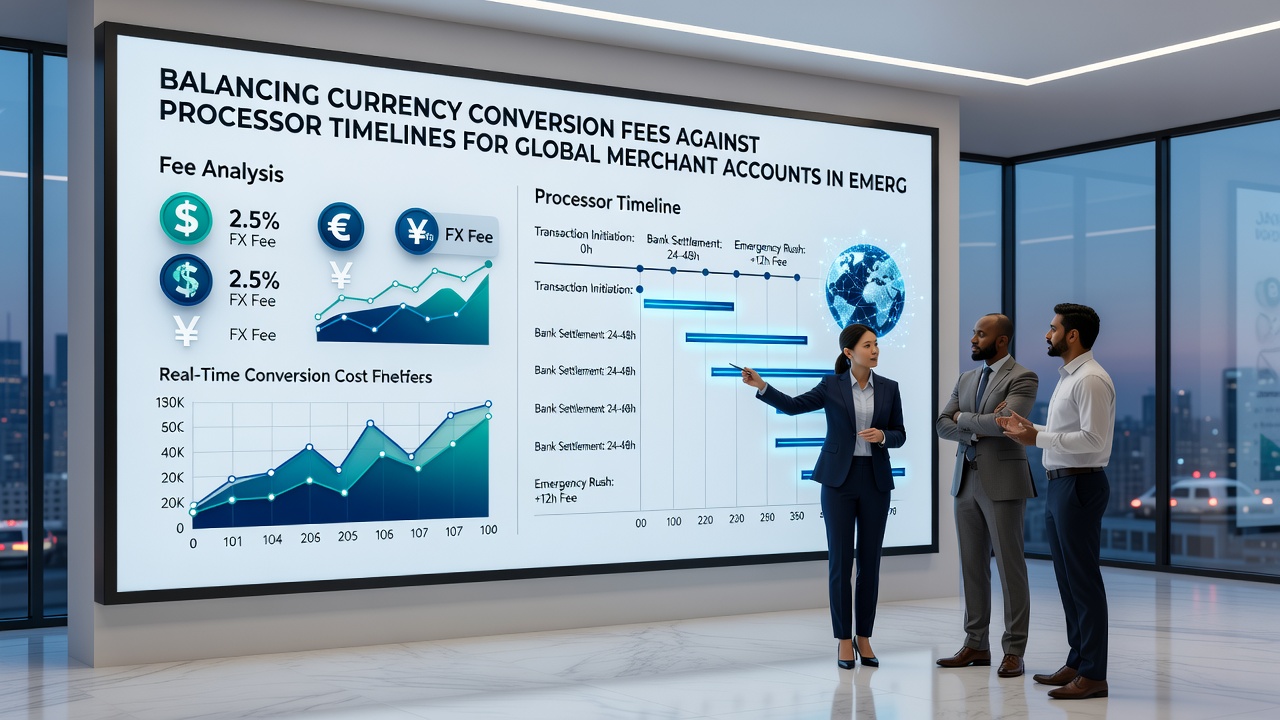
Payment orchestration platforms have gained traction because they route each transaction to the processor offering the best combination of fee and speed for that specific currency pair and region. Figures released in mid-2026 by regional fintech associations reveal that businesses using orchestration reduced their effective FX cost by 0.9 percentage points on average while shortening average settlement from 4.2 days to 2.8 days. These platforms also surface alternative rails such as stablecoin settlements or correspondent banking networks that bypass traditional card rails for certain corridors.
Regulatory and Infrastructure Influences
Central bank policies in emerging markets increasingly shape the available options. Some jurisdictions now require processors to disclose the full FX markup at checkout, which has prompted greater competition and narrower spreads. At the same time, improvements in real-time payment systems like India's UPI linkages and Brazil's Pix network allow faster domestic legs of international transactions, even when the initial conversion still occurs through international card networks. Those who've examined transaction data across multiple processors find that hybrid setups combining local instant-payment rails with global FX providers deliver the most consistent balance between cost and speed.
Practical Considerations for July 2026 and Beyond
As of July 2026, merchants report that volatility in emerging-market currencies has widened the gap between spot rates and processor quotes, making it more important to monitor both fee schedules and settlement calendars simultaneously. Processors that publish daily FX grids and offer API access to projected settlement times give businesses clearer visibility into net proceeds. In practice, the optimal choice often shifts monthly as currency volatility, processor promotions, and local regulatory changes alter the relative advantage of each option.
Conclusion
Merchants succeed when they treat currency conversion fees and processor timelines as interconnected variables rather than separate line items. By mapping actual settlement performance against quoted costs across their transaction mix, businesses in emerging markets can identify processor combinations that preserve margins without compromising liquidity. Continued infrastructure upgrades and transparent pricing rules are expected to narrow the current range of outcomes, yet the fundamental task of balancing these two factors will remain central to profitable cross-border operations.