14 Jul 2026
Bridging Batch Settlement Protocols with Supplier Ledger Updates in Multi-Location Retail Networks During Seasonal Demand Surges
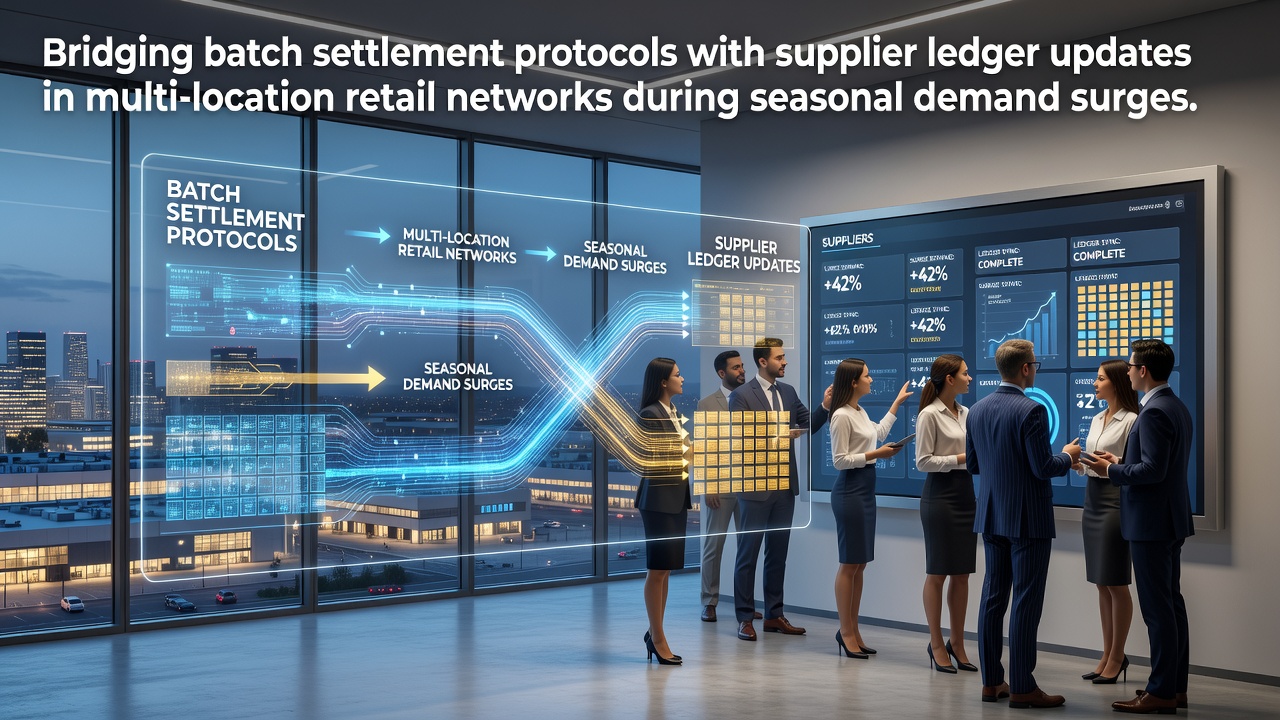
Retail networks with multiple locations face distinct pressures when seasonal demand surges hit, and batch settlement protocols must connect directly to supplier ledger updates to maintain accurate financial records and inventory levels. These protocols group transactions for processing at set intervals rather than handling each one individually, which creates efficiencies during high-volume periods yet requires tight coordination with supplier systems to prevent discrepancies in stock data and payment flows.
Data from payment industry reports indicate that multi-location retailers process thousands of transactions daily, and during peak seasons such as holiday shopping windows the volume multiplies rapidly. Batch settlement groups these into consolidated files sent to acquiring banks, while supplier ledgers require immediate or near-immediate updates to reflect goods sold and replenishment needs across sites. The connection between these two streams determines how quickly central offices can adjust orders and how accurately regional managers track cash positions.
Mechanics of Batch Settlement in Retail Chains
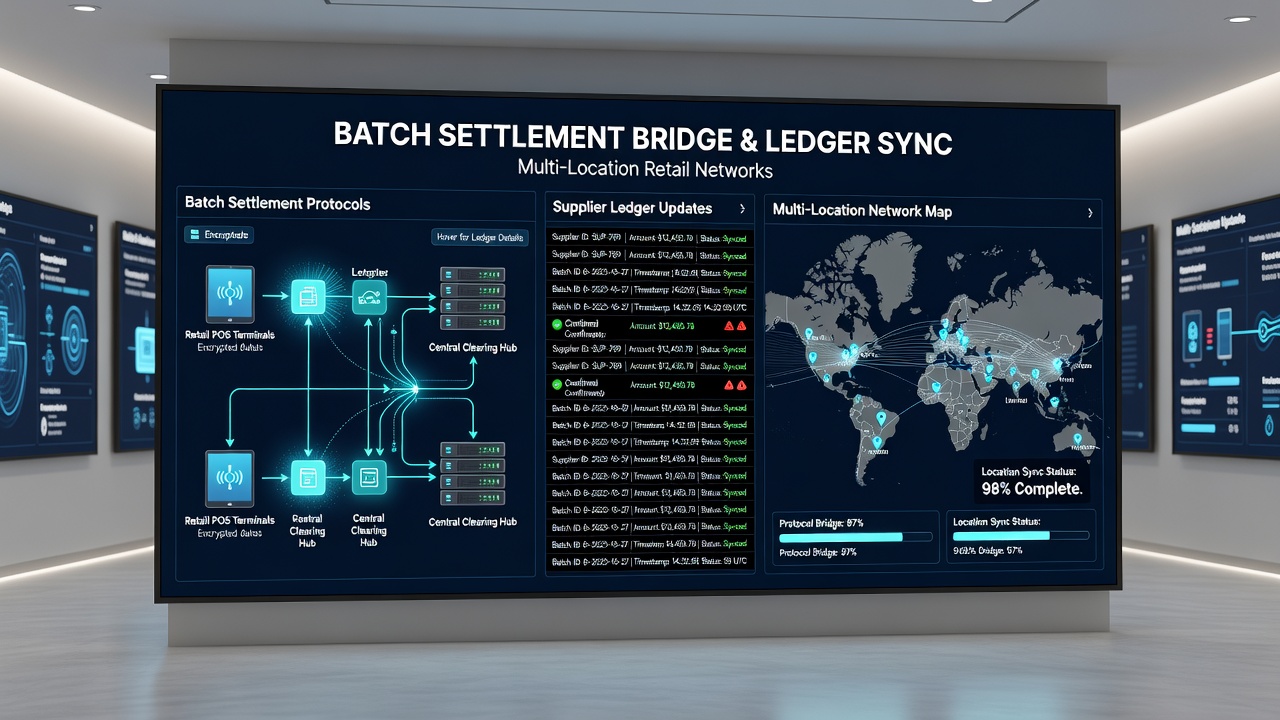
Batch settlement begins at the point-of-sale terminals where transactions accumulate throughout the day, and at predetermined cut-off times the system compiles authorization codes, amounts, and merchant identifiers into a single transmission. Acquirers then forward these batches to card networks for clearing, after which funds move to merchant accounts in one lump sum minus fees. Observers note that this approach reduces per-transaction costs and network load compared with real-time individual settlements, yet it introduces timing gaps that affect downstream ledger accuracy.
In multi-location setups the batches often originate from separate store systems that feed into a central processor, creating a need for standardized formatting so each location's data remains distinguishable during reconciliation. When seasonal surges occur, the increased transaction count stretches batch sizes and processing windows, which in turn delays the moment when supplier ledgers receive confirmation of sold units.
Supplier Ledger Synchronization Challenges
Supplier ledgers track inventory quantities, purchase orders, and payment obligations at each retail site, and updates typically depend on sales data flowing from point-of-sale systems into enterprise resource planning platforms. During normal periods the lag between batch settlement and ledger entry stays manageable, but seasonal demand spikes amplify any mismatch because stores sell through stock faster than batches clear. Researchers have documented cases where delayed ledger updates led to duplicate orders or stockouts across locations when central purchasing teams worked from incomplete figures.
Integration points usually involve application programming interfaces that pull settled transaction totals and map them to specific stock-keeping units, yet variations in how different suppliers format their records complicate the mapping. Retail networks operating across regions encounter additional layers when currency differences or tax rules alter the way batch amounts translate into ledger entries.
Integration Approaches During Peak Periods
Some networks deploy middleware that monitors batch status in real time and triggers partial ledger updates as soon as subsets within a batch receive confirmation, rather than waiting for the entire batch to clear. This staged approach keeps supplier records closer to actual sales activity even when full settlement stretches into the next business day. Studies of retail operations show that such middleware reduces the average lag between sale and ledger adjustment by several hours during high-volume windows.
Another method relies on pre-authorization holds that flag inventory as committed the moment a card receives approval, then reconcile the final settled amounts against those holds once the batch processes. The approach works well for predictable seasonal patterns, and data from the Bank of Canada indicate growing adoption among larger chains preparing for summer-to-fall transitions in 2026. Bank of Canada retail payments trends report highlights how these pre-commitment flags help multi-site operators maintain accurate supplier commitments across provinces.
July 2026 Operational Patterns
By July 2026 many retail networks had already completed system tests for the upcoming holiday cycle, focusing on batch-to-ledger bridges that could handle projected volume increases of 40 percent or more at flagship locations. European Central Bank statistics on card payments released that month showed similar preparation trends across member states, with emphasis on standardized messaging formats that speed reconciliation between acquirers and supplier platforms. European Central Bank card payments overview notes continued movement toward unified batch identifiers that carry location codes through the entire settlement chain.
These preparations included expanded use of cloud-based reconciliation tools that compare batch totals against point-of-sale logs every few minutes, alerting operations teams to any location where settlement data diverges from expected sales figures. The tools proved especially useful for chains managing both urban flagship stores and suburban outlets that experience different surge patterns.
Conclusion
Effective bridging of batch settlement protocols with supplier ledger updates rests on standardized data formats, staged update mechanisms, and continuous monitoring that together keep financial and inventory records aligned even when transaction volumes rise sharply. Retail networks that maintain these connections across locations gain clearer visibility into cash flow and stock positions during seasonal peaks, supporting more precise replenishment decisions and reducing the risk of mismatches that can disrupt operations.