7 Jul 2026
Connecting Daily Sales Records from Card Readers to Cloud-Based Accounting Platforms for Accurate Yearly Audits
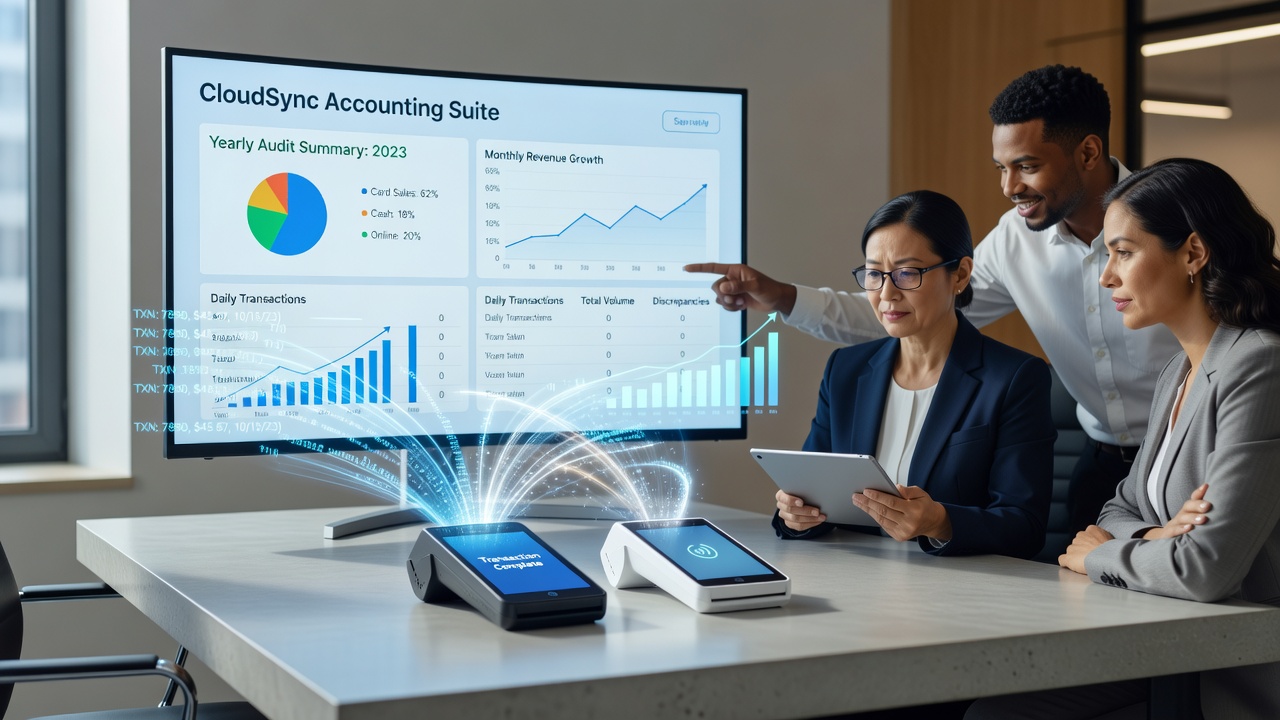 Retail operations that rely on card readers generate transaction data at high volumes each day, and linking those records directly to cloud-based accounting platforms creates a continuous flow of information that supports precise yearly audits. Systems integrate point-of-sale hardware with services such as QuickBooks Online or Xero through application programming interfaces that transfer details including transaction amounts, timestamps, payment methods, and merchant identifiers without manual re-entry. This automated pathway reduces discrepancies that auditors examine when they review revenue recognition and tax compliance. Data synchronization occurs in scheduled batches or near real time depending on the processor configuration, and merchants set rules that map card reader outputs to specific ledger accounts. For instance a standard credit sale routes to revenue while associated fees post to expense categories, and these mappings remain consistent across reporting periods. Observers note that such consistency proves valuable when external reviewers compare bank deposits against reported sales figures.
Integration Methods and Data Pathways
Application programming interfaces serve as the primary bridge between card reader processors and accounting software, while some platforms offer pre-built connectors that handle authentication and formatting automatically. Webhooks trigger updates as soon as a batch settles, and secure file transfers provide an alternative route for operations that process offline volumes. Research from accounting technology providers indicates that API-driven connections achieve higher match rates during reconciliation than spreadsheet uploads because timestamps and reference numbers align without transcription errors.
Security protocols follow payment card industry standards throughout the transfer process, encrypting cardholder data at the reader and maintaining tokenization once the information reaches the accounting layer. Those who manage multi-location retail setups often configure role-based access so that store managers view daily summaries while accountants retain full ledger control. July 2026 updates to several major processors introduced enhanced logging features that record every data handoff, giving auditors an immutable trail from terminal to final entry.
Supporting Accurate Yearly Audits
Yearly audits require verifiable trails that demonstrate sales occurred, payments were received, and revenue was recorded correctly. When daily card reader totals feed automatically into cloud ledgers, the resulting reports display cumulative figures that match processor statements and bank reconciliations. Government guidance from the Internal Revenue Service emphasizes maintaining electronic records that allow reconstruction of transactions, and integrated systems satisfy this expectation through timestamped entries and exportable audit logs.
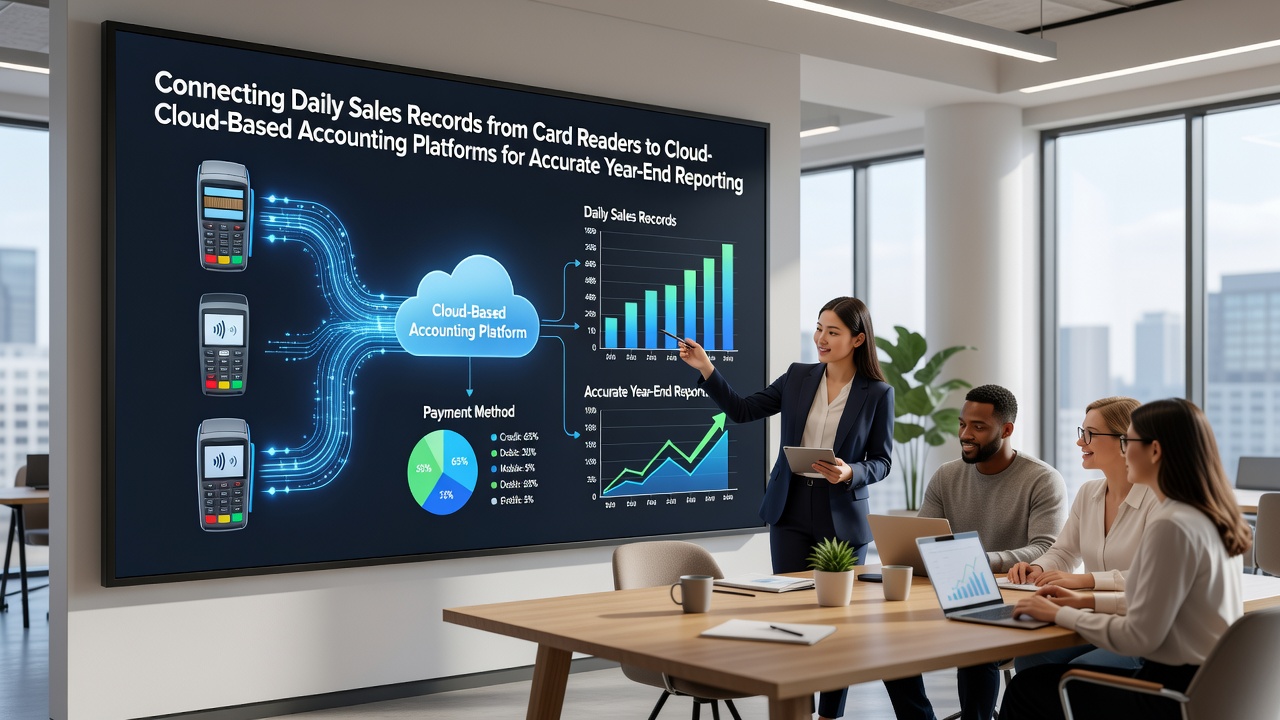
Discrepancies surface quickly when automated matching rules flag amounts that differ between the card processor report and the accounting entry. Staff then investigate within hours rather than weeks, which shortens the preparation window before an external audit begins. European accounting directives similarly stress the need for complete and unaltered source documentation, and cloud connections help satisfy those requirements by preserving original transaction metadata.
Practical Considerations for Implementation
Businesses begin by confirming that their card processor supplies the required data fields and that the accounting platform accepts those fields through its open integration layer. Testing covers a full settlement cycle to verify that fees, refunds, and chargebacks post accurately. Training covers how to review exception reports and adjust mappings when product tax codes change.
High-volume periods test these connections more rigorously because batch sizes increase and timing windows narrow. Retailers that maintain redundant connections or scheduled backup exports experience fewer interruptions when one pathway encounters temporary latency. Industry reports from organizations such as the American Institute of Certified Public Accountants highlight that organizations with documented integration procedures complete audit fieldwork in fewer days than those relying on manual compilation.
Conclusion
Linking card reader outputs to cloud accounting platforms establishes a documented chain from each transaction through daily totals to yearly financial statements. This structure supports the verification steps auditors perform and aligns with record-keeping expectations set by tax authorities in multiple jurisdictions. Organizations that maintain these connections position their data for straightforward review while preserving the detail needed to address specific inquiries during an audit cycle.