Coordinating Authorization Sequences Between Online Gateways and Merchant Accounts to Support Variable Subscription Cycles in Cross-Border Retail Networks
Written by Rosa Hansen · Aug 16, 2026
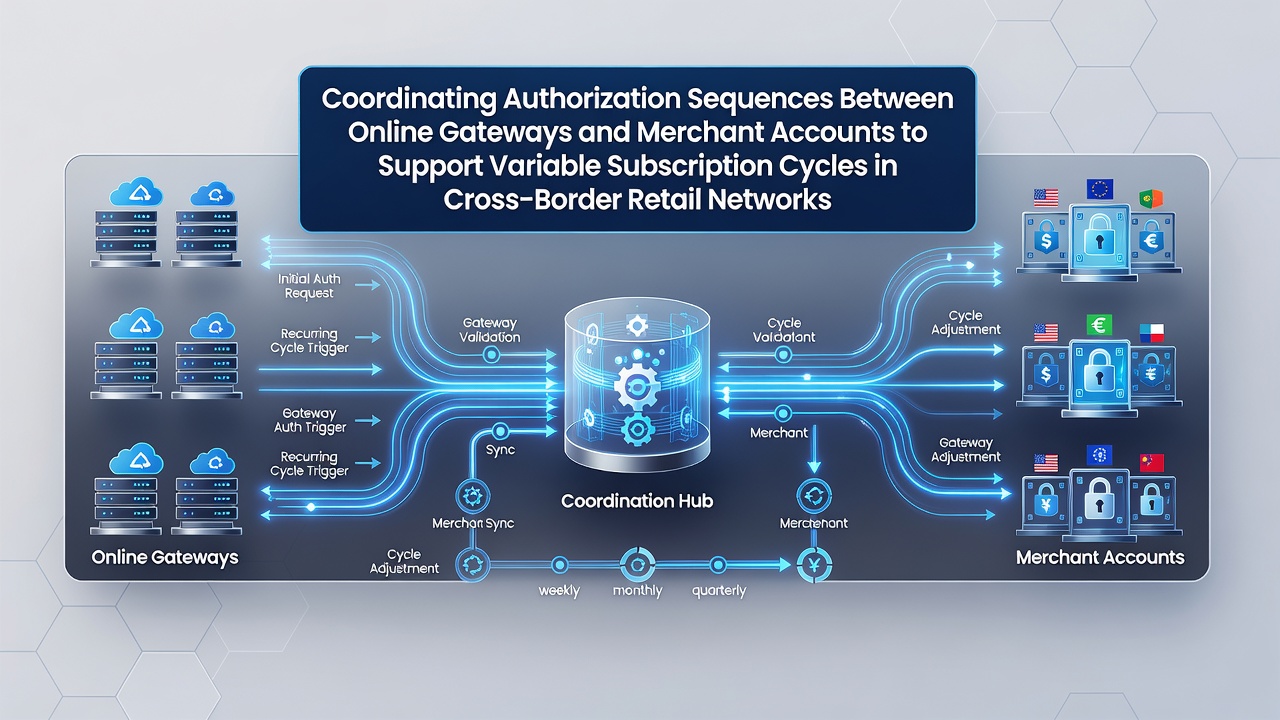
Coordinating Authorization Sequences Between Online Gateways and Merchant Accounts to Support Variable Subscription Cycles in Cross-Border Retail Networks
Retail networks that operate across multiple countries rely on precise coordination between payment gateways and merchant accounts to manage authorization sequences. These sequences determine whether a transaction receives approval before funds move. Variable subscription cycles add complexity because billing amounts and intervals shift based on customer selections or regional rules. Cross-border retail introduces currency conversions, regulatory differences, and time zone variations that affect how quickly authorizations complete. Payment gateways serve as the initial contact point for transaction requests. They receive details from the merchant's system, validate the card or account information, and forward the request to the acquiring bank tied to the merchant account. Merchant accounts hold the contractual relationship that allows funds to settle into the business's bank. When subscriptions vary, the gateway must pass updated parameters such as new cycle lengths or prorated amounts without triggering declines from the issuer.Authorization Flow in Variable Subscription Scenarios
Authorization begins when a customer initiates or modifies a subscription. The gateway captures the request and checks for required fields including amount, currency, and recurring indicators. It then sends an authorization request to the payment network, which routes it to the card issuer. The issuer evaluates available credit or funds and returns a response code. Successful responses carry an authorization code that the gateway stores and later uses for capture. In variable cycles, gateways often employ tokenization to store payment credentials securely while allowing amount changes on subsequent billing dates without new customer input.
Merchant accounts receive settlement instructions after authorization succeeds. The account provider batches captured transactions and submits them through the network for clearing. Variable subscriptions require the merchant account system to reconcile each capture against the original authorization to avoid mismatches that could lead to chargebacks. Data from the European Central Bank indicates that cross-border recurring transactions processed in 2025 showed a 12 percent higher reconciliation error rate when cycle parameters were not synchronized between gateway and merchant account platforms.
Handling Cross-Border Requirements
Cross-border retail networks encounter additional layers during authorization. Currency conversion occurs at the network level or through the merchant account provider depending on the agreement in place. Gateways must transmit the transaction currency code accurately so issuers apply the correct exchange rate at authorization time. Regulatory frameworks such as the EU's revised Payment Services Directive require strong customer authentication for recurring payments above certain thresholds, which gateways incorporate into the sequence before forwarding requests.
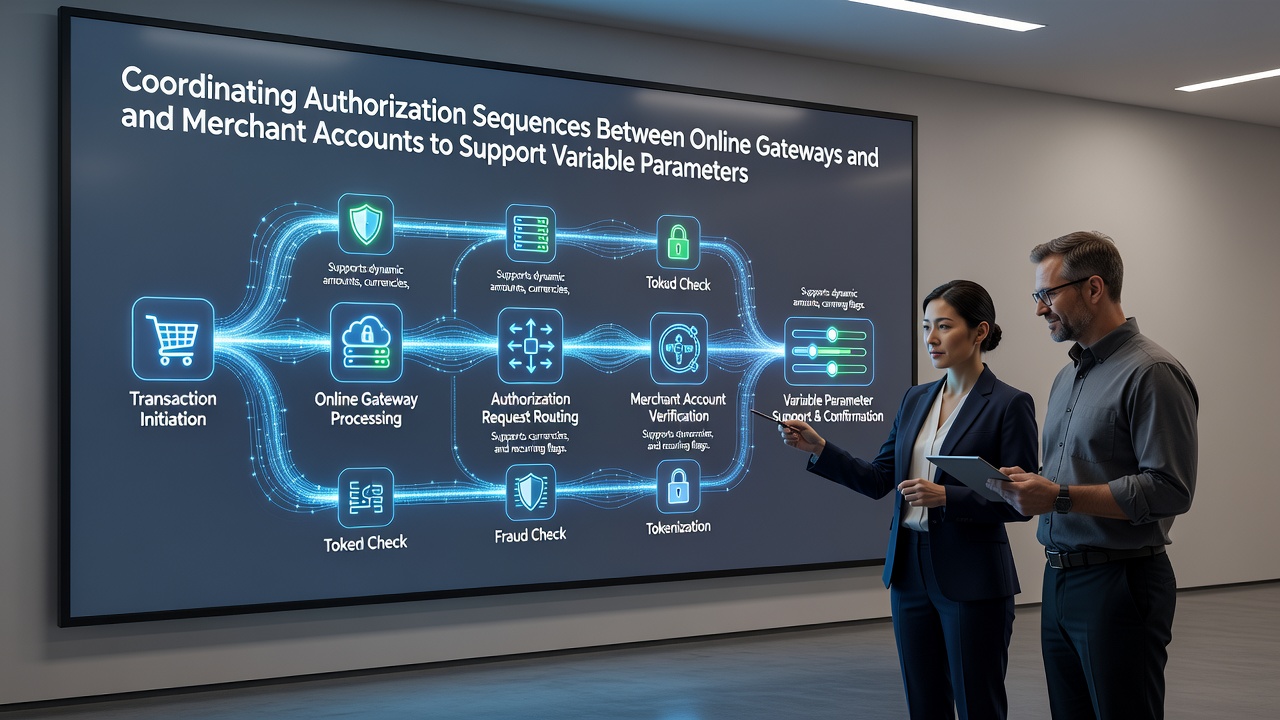
Time zone differences affect when authorizations are attempted relative to issuer cut-off times. Networks operating in August 2026 will see updates to ISO 20022 messaging standards that include expanded fields for subscription metadata. These fields allow gateways to signal cycle variability directly to merchant accounts, reducing the need for separate reconciliation files. Observers note that platforms adopting the updated messaging format earlier report fewer declines on variable-amount subscriptions.
Technical Coordination Mechanisms
Application programming interfaces connect gateways with merchant account processors in real time. These APIs transmit not only the authorization request but also metadata about the subscription schedule. When a cycle changes, the gateway sends an update message that the merchant account system uses to adjust expected settlement amounts. Batch files serve as a backup method in regions with limited connectivity, though they introduce delays that can span multiple business days.
Token vaults maintained by gateways or third-party providers store credentials separately from transaction data. This separation allows merchant accounts to process future variable charges without storing sensitive card details locally. Research from the Bank of Canada on cross-border payment efficiency highlights that tokenized recurring transactions experience 8 percent fewer authorization failures compared with those using stored card numbers directly.
Settlement and Reconciliation Practices
After authorization, capture requests move through the same gateway-to-network path. Merchant accounts track partial captures for subscriptions billed in installments or adjusted mid-cycle. Automated reconciliation tools match authorization codes to capture records and flag discrepancies for manual review. In cross-border setups, currency gains or losses from rate fluctuations between authorization and capture appear in merchant account reports as separate line items.
Networks continue to refine how they signal expected settlement dates for variable subscriptions. Some gateways now include projected capture windows in the initial authorization response so merchant account systems can forecast cash flow more accurately across borders.
Conclusion
Effective coordination between online gateways and merchant accounts supports variable subscription cycles by maintaining consistent data exchange throughout the authorization sequence. Cross-border retail networks benefit when systems align on currency handling, regulatory checks, and settlement timing. Continued adoption of updated messaging standards scheduled for 2026 will further streamline these processes for merchants operating in multiple markets.