How Retailers Match Device-Verified Charges to Live Supplier Stock Updates in Crowded Seasonal Markets
Written by Jakob Schmitz · Jul 28, 2026
How Retailers Match Device-Verified Charges to Live Supplier Stock Updates in Crowded Seasonal Markets
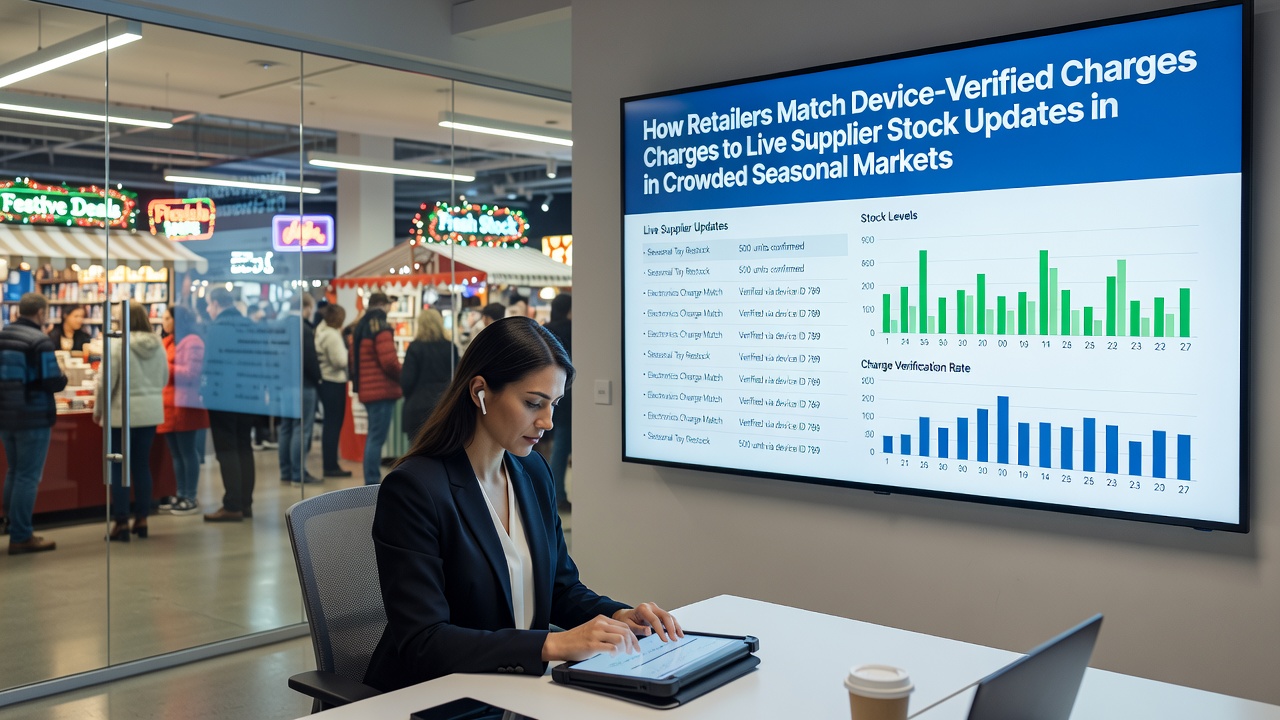
Retail operations in crowded seasonal markets rely on precise coordination between device-verified charges and real-time supplier stock updates to maintain accurate inventory records while processing high transaction volumes. Device-verified charges originate from portable payment terminals that confirm transaction details through encrypted authorization sequences before funds move from customer accounts to merchant ledgers. These verified charges then trigger automated queries that cross-reference payment data against current stock quantities held by suppliers. Systems achieve this match through application programming interfaces that connect point-of-sale hardware directly to supplier databases, allowing inventory levels to adjust within seconds of each completed sale. Observers note that this process becomes critical during periods of elevated demand when stock discrepancies can disrupt fulfillment chains.
Device Verification Mechanisms in Retail Settings
Portable devices capture payment information and apply verification protocols that include tokenization and cryptographic checks to confirm each charge before it advances to settlement. Retailers integrate these steps with inventory platforms so that a successful device verification immediately signals a reduction in available supplier stock for the purchased item. Data pathways run from handheld terminals through merchant gateways to centralized ledgers, then onward to supplier systems that update quantities in near real time. Studies from the National Retail Federation indicate that synchronized updates reduce stock-out incidents by aligning sales data with procurement triggers. In July 2026 seasonal peaks, networks handling thousands of simultaneous transactions depend on this linkage to prevent overcommitment of goods still listed as available.
Real-Time Stock Synchronization Processes
Live supplier stock updates flow through cloud-based platforms that receive signals from verified device charges and recalculate inventory counts across multiple distribution points. When a charge clears verification, the system deducts the corresponding unit count from supplier records and issues alerts if thresholds approach depletion. Integration relies on standardized data formats that allow seamless exchange between retailer point-of-sale software and supplier enterprise resource planning tools. Retail chains operating in high-traffic environments use these connections to coordinate replenishment orders automatically. Research conducted by the European Commission's retail technology initiatives shows that such automated matching shortens response times between sale confirmation and stock adjustment compared with manual reconciliation methods.
Handling Peak Loads in Seasonal Markets
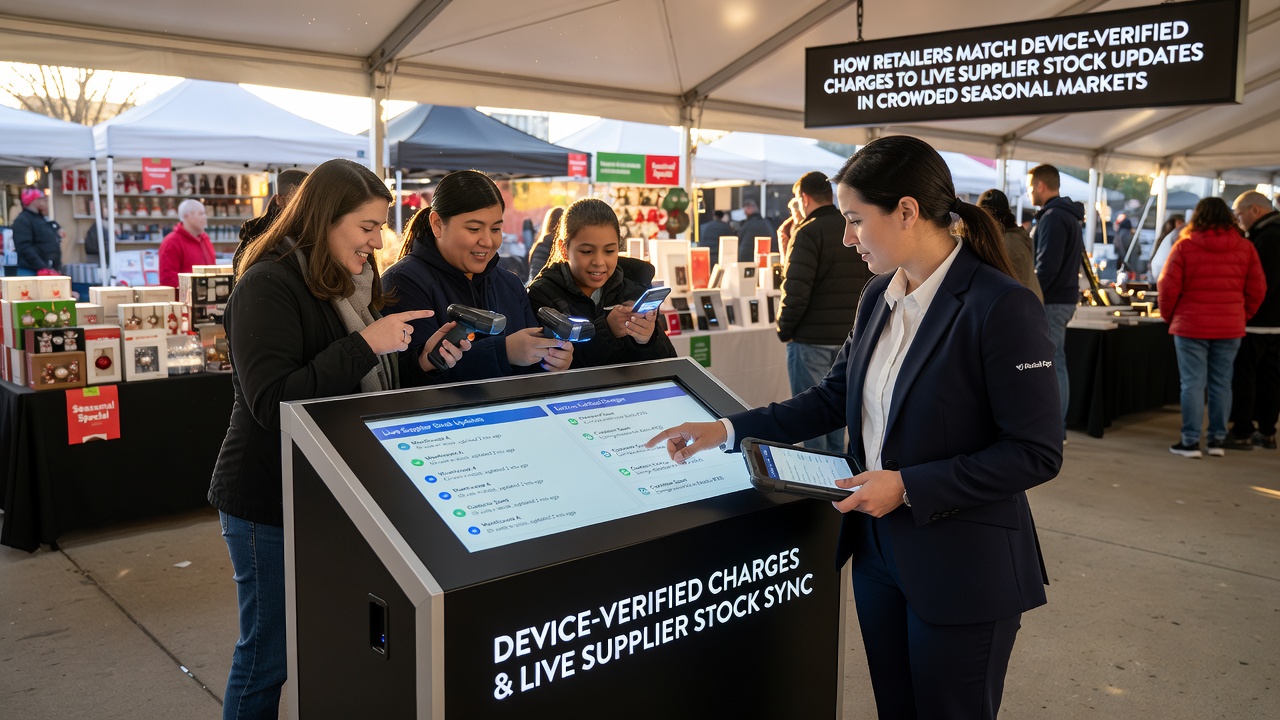
Crowded seasonal markets generate transaction spikes that test the capacity of both payment verification and inventory synchronization layers. Retailers deploy load-balancing techniques across device networks to maintain verification speed while routing stock update requests to supplier servers without introducing delays. Redundant data pathways ensure that a temporary interruption in one connection does not break the match between charges and inventory figures. Those who manage these systems during July 2026 summer sales events report that fallback protocols automatically reroute queries to alternate supplier nodes when primary links experience congestion. The sequence begins with device authorization, proceeds through charge verification, and concludes with an inventory decrement broadcast that reaches supplier warehouses within defined latency windows.
Data Standards Supporting the Matching Workflow
Industry standards for data exchange govern how device-verified charges translate into supplier stock adjustments, specifying fields for item identifiers, quantities, and transaction timestamps. Compliance with these formats enables interoperability between diverse hardware vendors and software providers active in retail environments. Government resources from the U.S. Department of Commerce outline recommended practices for maintaining data integrity during high-volume transfer cycles, emphasizing encryption at each hop between devices and supplier databases. Retailers apply these guidelines to ensure that stock updates reflect only verified charges rather than pending authorizations that might later decline. This distinction prevents premature inventory depletion that could affect fulfillment accuracy in crowded market conditions.
Integration Examples Across Retail Channels
One retail network operating seasonal pop-up locations connects mobile payment devices to a central supplier portal that refreshes stock data every thirty seconds during peak hours. Each verified charge initiates an API call that confirms product availability before finalizing the transaction record. Another operation in multi-channel environments routes device data through middleware that translates payment confirmations into supplier-specific inventory commands. Observers tracking these implementations note consistent use of timestamp synchronization to align charge records with stock movements across time zones and distribution centers. The approach supports accurate reporting for merchants who must reconcile daily sales against supplier invoices during extended seasonal rushes.
Conclusion
Retailers achieve reliable matching of device-verified charges to live supplier stock updates by combining secure payment protocols with standardized data exchange formats that operate across crowded seasonal markets. The workflow moves from device authorization through verification and directly into inventory recalculation, supported by redundant connections and compliance frameworks. Continued refinement of these linkages allows operations to scale with transaction volumes while preserving record accuracy throughout periods such as the July 2026 seasonal cycle.