30 Jun 2026
How Tokenization Bridges Approval Steps with Stock Replenishment Tools in Busy Retail Networks
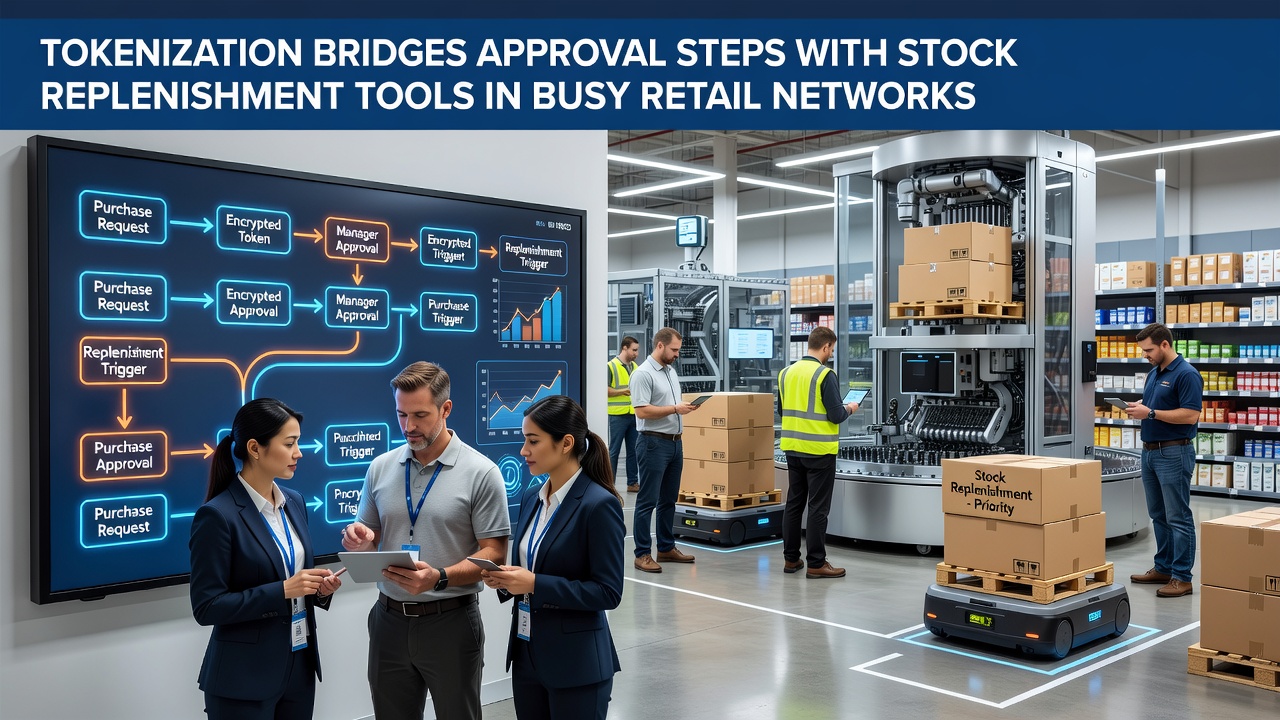 Tokenization replaces sensitive payment card details with unique, non-reversible tokens that maintain transaction functionality while limiting exposure during processing, and this mechanism supports direct connections between payment approvals and automated inventory adjustments in high-volume retail environments. Retail networks rely on these tokens to move data securely from point-of-sale terminals through payment gateways into backend systems that monitor stock levels and initiate supplier orders once approvals clear. Payment approvals begin when a customer presents a card at checkout, at which point the terminal generates a token that travels through the network without exposing the original account number. Systems validate the token against issuer rules in milliseconds, confirming funds availability before any further actions occur. Once authorization succeeds, the same token identifier feeds into integrated platforms that track product movement across store locations and distribution centers.
Core Mechanics of Token Integration
Processors map each approved token to specific transaction metadata including item identifiers, quantities sold, and location codes, then route this information to inventory databases without additional manual entry. Data flows occur through standardized APIs that connect payment processors directly to warehouse management software, allowing real-time deduction of sold units from available stock counts. Retail chains operating across multiple regions report that these automated handoffs reduce the interval between sale completion and replenishment request generation to under thirty seconds during standard operations.
Observers note that token-based systems maintain audit trails that link each approval event to corresponding inventory changes, supporting compliance requirements from bodies such as the National Institute of Standards and Technology. The structure keeps payment data isolated while permitting operational systems to act on transaction outcomes, which proves essential when networks handle thousands of simultaneous checkouts.Real-Time Replenishment Triggers in Peak Periods
Busy retail networks experience volume spikes during holidays and promotional events, where tokenization enables approval sequences to activate stock alerts without separate data entry steps. When a token confirms a sale of high-turnover items like electronics or seasonal goods, the integrated platform calculates reorder thresholds based on current inventory and historical velocity data. Suppliers receive automated notifications through the same token-linked record, shortening the time from shelf depletion to restocking order placement.
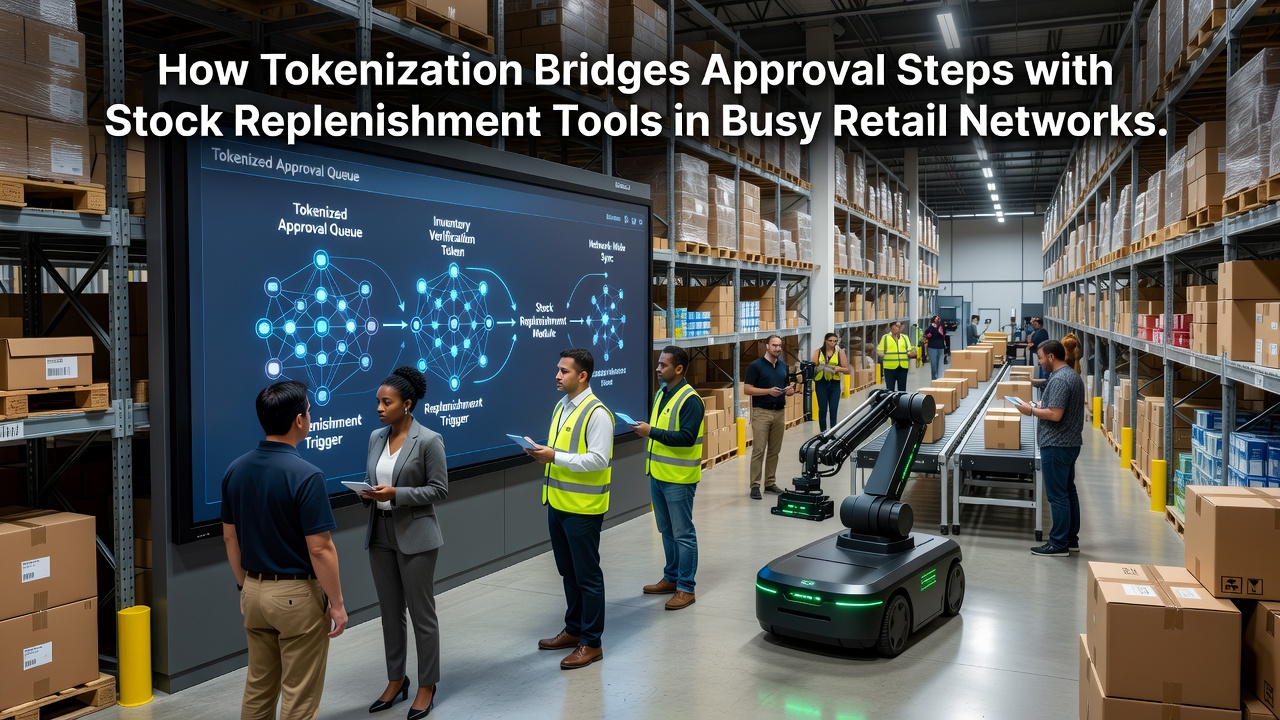 Studies conducted by the Retail Industry Leaders Association indicate that networks using token-to-inventory linkages cut stockout incidents by measurable percentages compared with siloed systems, particularly in June 2026 when seasonal demand patterns aligned with expanded mobile payment adoption. The linkage operates continuously, adjusting for returns or cancellations by reversing token entries and restoring inventory allocations accordingly.
Security and Operational Continuity
Tokenization limits the scope of potential breaches because compromised tokens hold no value outside their specific merchant environment, yet this isolation does not impede the flow of approval confirmations to replenishment modules. Network architects design these pathways with encryption at every hop, ensuring that inventory systems receive only sanitized transaction summaries rather than raw card data. European regulatory frameworks, including guidance from the European Union Agency for Cybersecurity, emphasize such segmented architectures for maintaining both payment security and supply chain responsiveness.
Large chains deploy these integrations across thousands of terminals, where each location syncs its sales data through centralized token vaults that also feed demand forecasting models. The result appears in coordinated supplier shipments timed to match projected shortfalls, reducing excess carrying costs while preserving product availability.Implementation Patterns Across Networks
Independent operators and national chains follow similar sequences when connecting tokenized approvals to replenishment tools, starting with gateway configuration that tags each successful authorization with product-level details. Middleware layers translate token events into inventory transactions, applying business rules such as minimum order quantities or preferred supplier routing. Testing phases reveal that latency remains consistent even as transaction counts rise, because token processing avoids the heavier computational load associated with full card data handling.
One documented deployment at a multi-state grocery operator showed inventory updates propagating to supplier portals within the same minute as customer checkout completion, using token references as the sole common identifier between payment and logistics platforms. Similar patterns emerge in convenience store networks where space constraints demand precise, rapid restocking cycles.Conclusion
Tokenization establishes a secure conduit that carries approval outcomes directly into stock management workflows, allowing retail networks to maintain operational tempo without exposing sensitive payment information. The approach supports scalability across busy periods by minimizing manual interventions and preserving data integrity throughout the transaction lifecycle. Continued adoption reflects measurable improvements in both security posture and inventory accuracy, driven by the technical compatibility between tokenized records and automated replenishment logic.