Mapping Authorization Chains from Credit Card Swipes to Bank Deposits in Brick-and-Mortar Supply Networks
Written by Uma Vogel · Aug 13, 2026
Mapping Authorization Chains from Credit Card Swipes to Bank Deposits in Brick-and-Mortar Supply Networks
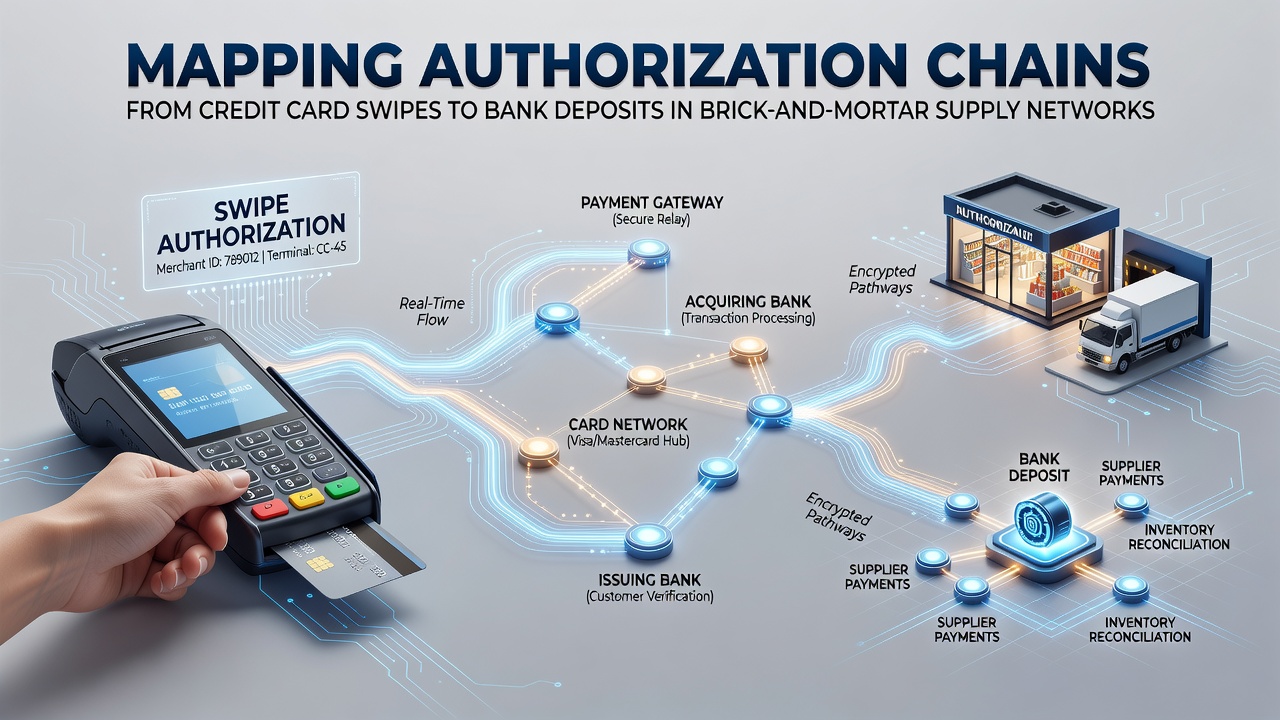
Physical retail operations rely on precise sequences that begin at point-of-sale terminals and extend through multiple intermediaries before funds reach merchant accounts, and these sequences shape how suppliers manage inventory replenishment in August 2026. Card-present transactions initiate when a customer presents a card at a checkout device, prompting the terminal to capture magnetic stripe data, EMV chip information, or contactless signals before forwarding the request to the merchant's acquirer processor.
Initial Capture and Routing Stages
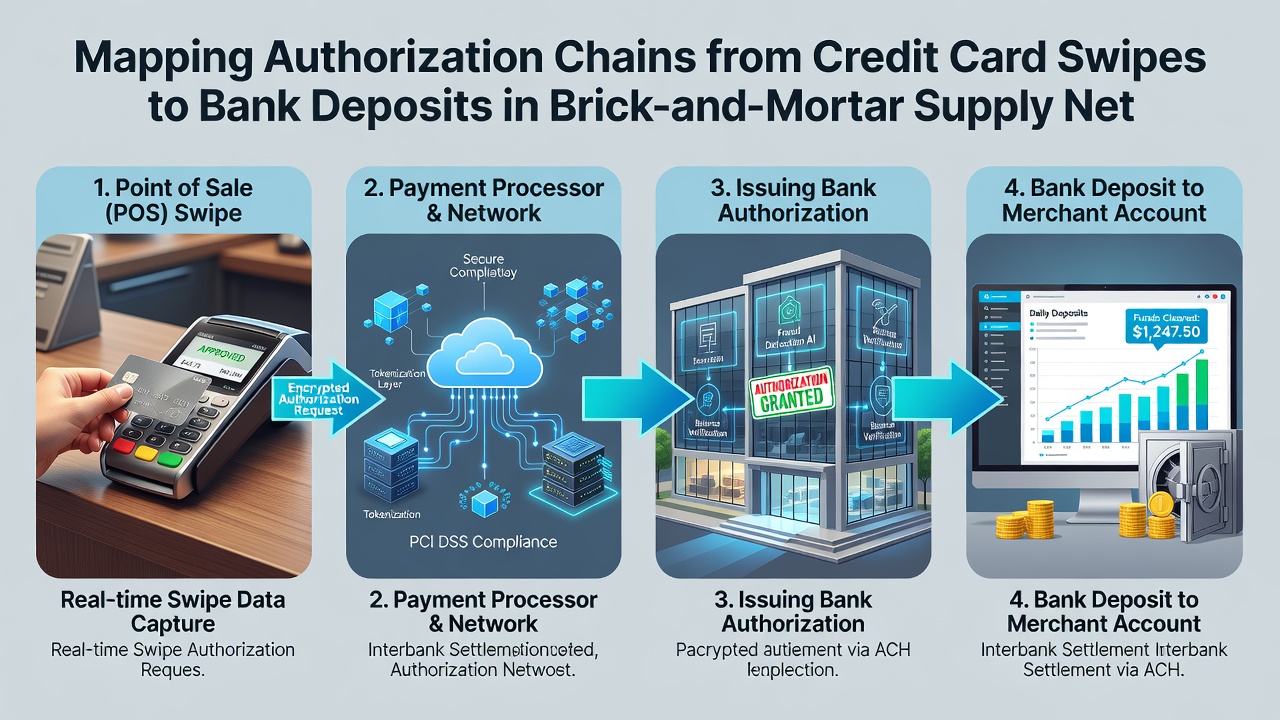
Terminals in brick-and-mortar locations encode transaction details including amount, merchant identifier, and card data, then transmit packets over secure networks to acquiring banks that verify merchant legitimacy while checking for basic format compliance. Acquirers route the authorization request through card networks such as Visa or Mastercard, which direct the message onward to the issuing bank responsible for confirming available credit or funds. Issuers apply risk algorithms and balance checks before returning an approval code or decline within seconds, completing the front-end authorization leg that allows the sale to proceed without immediate cash exchange.
Supply chain managers monitor these approval rates because declined transactions reduce daily revenue that would otherwise fund supplier payments and restocking cycles. Data from the Federal Reserve's payment studies reveal that card-present authorization success rates in U.S. retail environments averaged above 98 percent during recent measurement periods, supporting consistent cash flow into distribution networks.
Settlement and Clearing Mechanisms
Once authorization completes, the transaction enters a batch settlement process typically executed at the close of each business day. Acquirers compile approved transactions into files sent to card networks, which calculate net obligations between issuers and acquirers through a clearinghouse arrangement. Funds move from issuer accounts to acquirer accounts within one to three business days depending on network rules and merchant volume tiers, after which acquirers deposit net amounts minus interchange fees and assessments into the merchant's designated bank account.
European Central Bank reports on retail payment systems document similar timelines across euro-area markets, noting that same-day settlement options have expanded for larger merchants while smaller outlets continue to observe standard next-day deposit patterns. These deposit schedules directly influence how retailers schedule payments to upstream suppliers, since delayed inflows can shift order placement windows by 24 to 48 hours during high-volume periods.
Integration with Inventory and Supplier Systems
Modern point-of-sale platforms transmit approved transaction totals into enterprise resource planning tools that update real-time inventory counts and trigger automatic purchase orders when stock thresholds are reached. Retailers operating multi-location networks rely on this linkage to maintain balanced distribution across warehouses, ensuring that supplier deliveries align with projected revenue from card deposits. Observers note that mismatches between authorization volumes and actual bank credits occasionally occur due to chargebacks or processing corrections, prompting finance teams to maintain reconciliation buffers before committing to supplier contracts.
Industry analyses from the Payments Council of Australia highlight how physical retailers in high-traffic sectors use aggregated authorization data to forecast weekly supplier requirements, reducing both overstock situations and stockout events that disrupt supply continuity. Batch files containing daily totals flow from acquirer portals into accounting software, where automated entries match deposits against expected receivables and flag variances for review.
Regulatory and Operational Considerations
Compliance frameworks such as PCI DSS govern data handling at each hop in the chain, requiring encryption standards during transmission from store terminals to acquirer gateways. Merchants must segment networks that carry cardholder data from those managing inventory or supplier communications to limit exposure. Updates scheduled for implementation in August 2026 introduce enhanced tokenization requirements for card-present environments, compelling retailers to upgrade terminal firmware and reconfigure connections to processors ahead of the deadline.
Those managing supply networks track regulatory calendars because changes in authorization data formats can affect the timing of downstream inventory updates and supplier invoice processing. Research published by the Bank of Canada on retail payment infrastructure shows that standardized message formats across networks have shortened reconciliation cycles, allowing merchants to confirm deposit accuracy within 48 hours rather than the multi-day windows common in earlier decades.
Conclusion
The authorization chain from physical swipe to bank deposit operates as an interconnected sequence that transmits approval signals, clears obligations between financial institutions, and ultimately credits merchant accounts, thereby sustaining the cash flows that support supplier relationships in brick-and-mortar supply networks. Accurate mapping of these steps enables retailers to synchronize deposit expectations with inventory procurement schedules while meeting evolving compliance standards across different regions.