21 May 2026
Navigating Data Protection Standards in Multi-Channel Payment Setups for Growing Online Ventures
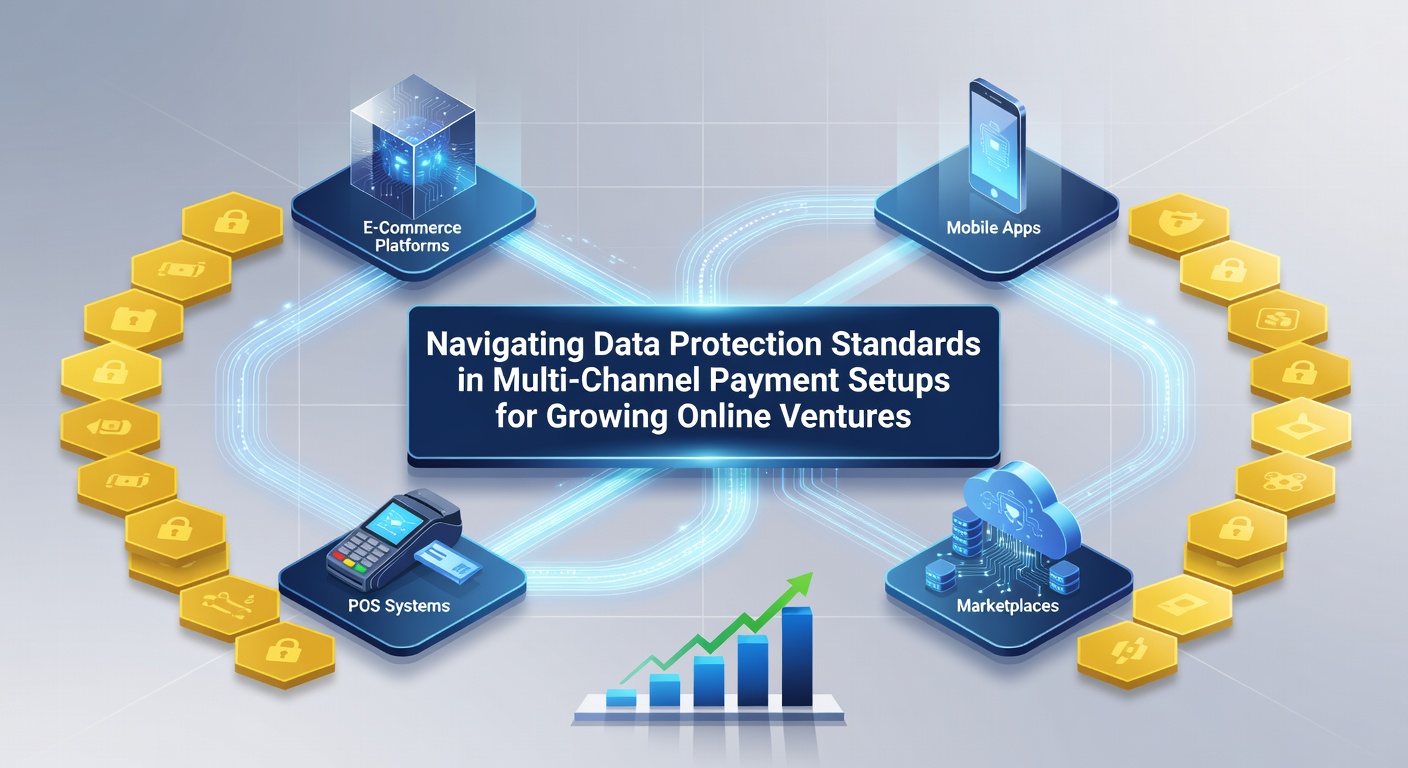
Online ventures that operate across websites, mobile applications, social commerce platforms, and physical point-of-sale systems face layered requirements when handling customer payment information, and data protection standards have evolved to address these distributed environments. Growing businesses must coordinate compliance efforts so that encryption protocols, access controls, and breach notification procedures remain consistent whether a transaction occurs through a website checkout, an in-app purchase, or a linked loyalty program at a retail kiosk.
Mapping the Multi-Channel Payment Landscape
Payment flows now span several touchpoints that each generate, transmit, and store sensitive data, which means organizations must document how cardholder information moves between channels without creating gaps in oversight. Researchers at academic institutions have mapped these pathways and found that retailers using three or more channels experience a higher volume of data handoffs, each of which requires separate validation against applicable rules. Observers note that integration points such as customer relationship management databases and third-party gateways often become focal areas during audits because they aggregate records from disparate sources.
Core Regulatory Frameworks in Operation
Several overlapping standards govern how payment data receives protection, and businesses typically begin by aligning operations with the Payment Card Industry Data Security Standard while also addressing regional privacy statutes. In the United States, the Federal Trade Commission enforces rules that require reasonable security measures for consumer financial information, whereas in Australia the Privacy Act and Australian Privacy Principles set expectations for cross-border data transfers that frequently accompany international sales. Figures released by regulatory bodies indicate that organizations maintaining synchronized policies across jurisdictions reduce audit findings by measurable margins compared with those that treat each channel as an isolated silo.
Canada’s Personal Information Protection and Electronic Documents Act adds further requirements around consent and accountability, compelling online ventures to maintain clear records of how payment details are collected and used across mobile and web interfaces. Those who have examined enforcement actions report that failure to demonstrate consistent consent mechanisms across channels often triggers remediation orders and financial penalties.
Operational Challenges During Scaling
As transaction volumes increase, the technical task of applying uniform encryption and tokenization across every channel grows more complex, particularly when legacy systems interface with newer cloud-based services. Data indicates that many mid-sized ventures encounter difficulties synchronizing key management processes between an e-commerce platform and a separate subscription billing engine, leading to temporary variances in protection levels. Experts have observed that these variances surface most often during seasonal sales spikes when additional temporary staff gain system access without updated training on data-handling protocols.

Practical Compliance Approaches
Businesses that succeed in maintaining alignment usually adopt centralized logging systems that capture access events from every channel and feed them into a single monitoring dashboard. According to guidance published by the Office of the Australian Information Commissioner, such consolidated records simplify the process of demonstrating accountability during regulatory reviews. Another common step involves conducting regular gap analyses that compare current configurations against the latest version of each applicable standard, then prioritizing remediation based on risk assessments rather than channel-by-channel checklists.
Tokenization services that replace primary account numbers with unique identifiers have gained wider adoption because they limit the scope of data exposed if one channel suffers a compromise. Research indicates that ventures implementing these services across both online and in-store environments report fewer instances of full card data appearing in internal logs, which in turn reduces the attack surface presented to potential intruders.
Developments Anticipated Around May 2026
Industry working groups have signaled that revisions to several data protection requirements are scheduled to take effect in May 2026, with particular emphasis on real-time monitoring capabilities and expanded breach notification timelines for multi-channel operators. These changes build on existing frameworks by introducing stricter expectations for continuous risk evaluation whenever new sales channels are added. Organizations that have already invested in automated compliance tooling stand better positioned to incorporate the forthcoming specifications without major re-engineering of their payment stacks.
Conclusion
Navigating data protection standards in multi-channel payment environments requires coordinated policies, technical controls, and ongoing monitoring that span every customer interaction point. Ventures that map their data flows, align with regional statutes, and prepare for upcoming revisions position themselves to handle growth while satisfying regulatory expectations across jurisdictions. Continued attention to integration points and consent mechanisms remains essential as payment ecosystems continue to diversify.