The Clearing Cycle Connecting Credit Card Authorizations to Merchant Account Balances in Digital Retail Operations
Written by Uma Vogel · Aug 6, 2026
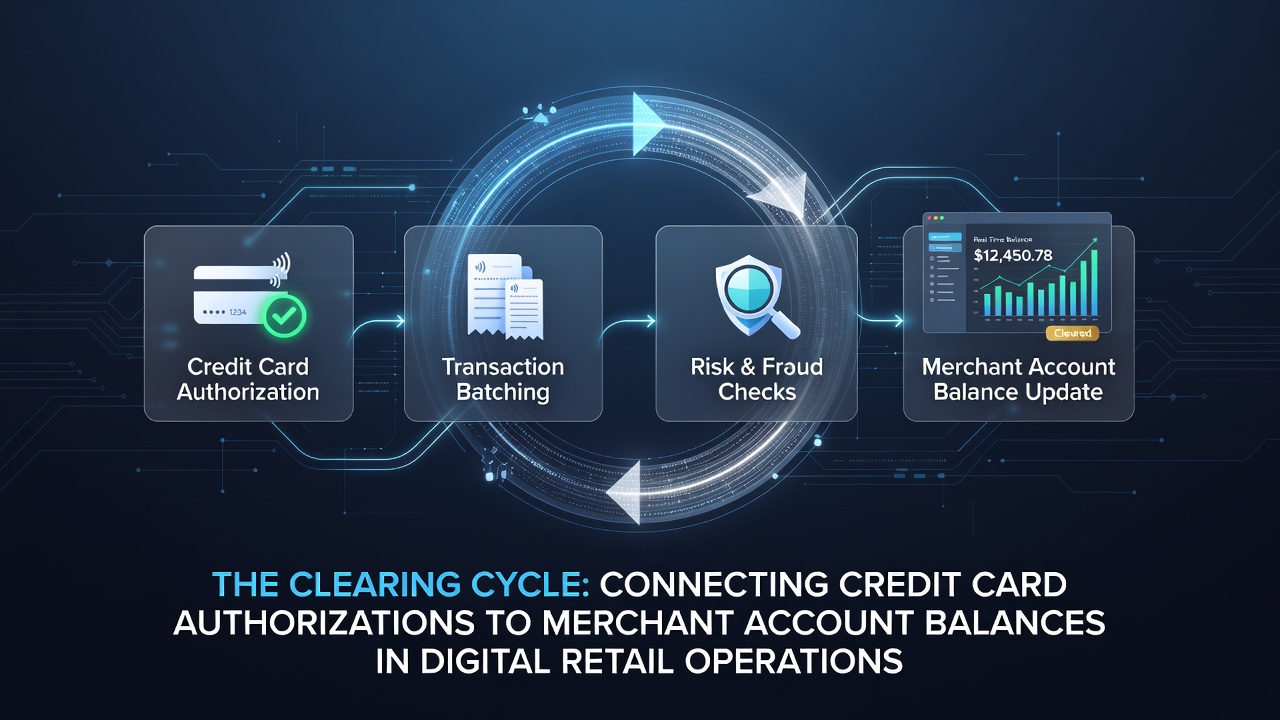
The Clearing Cycle Connecting Credit Card Authorizations to Merchant Account Balances in Digital Retail Operations
Digital retail operations rely on a precise sequence of steps that move funds from cardholder accounts into merchant balances, and the clearing cycle forms the backbone of this process. Authorizations begin when a customer completes a purchase online, yet the actual transfer of money occurs later through a series of coordinated actions between processors, networks, and banks.
Authorization Phase in Digital Transactions
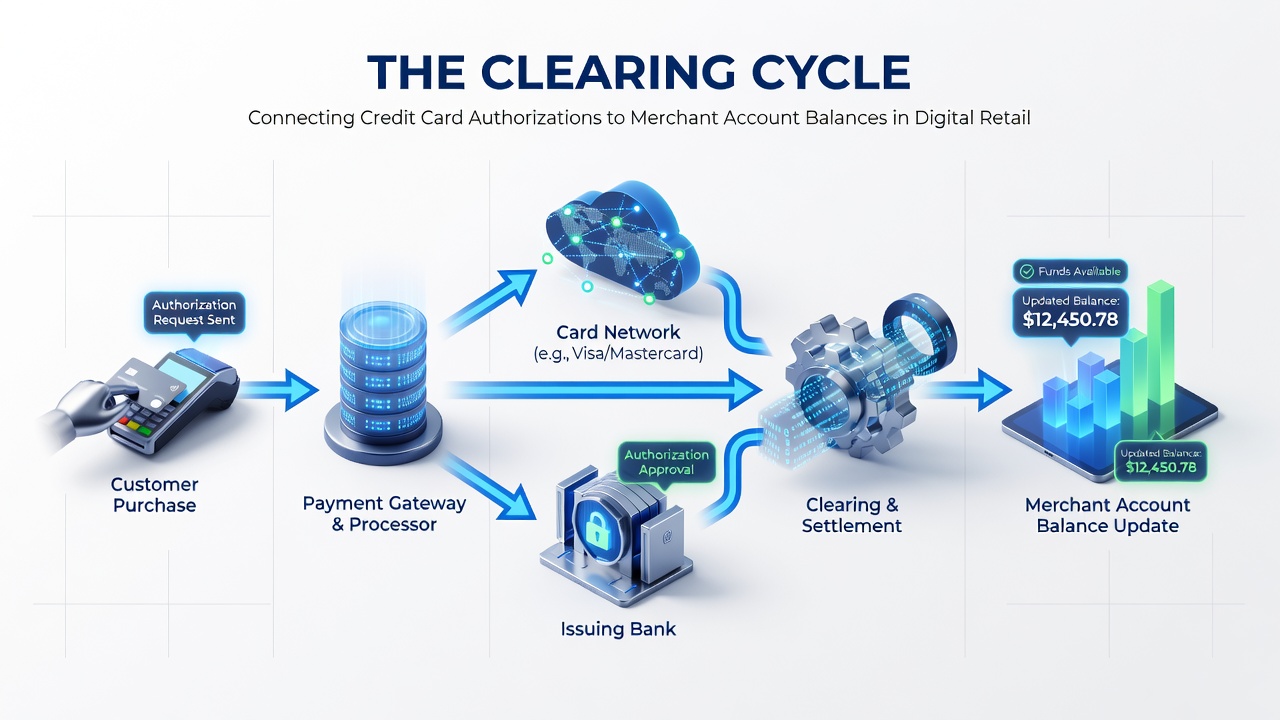
Retail platforms send authorization requests to payment processors as soon as shoppers enter card details at checkout, and these requests travel through card networks such as Visa and Mastercard to the issuing bank. The issuing bank checks available credit or funds, then responds with an approval or decline code within seconds, while the authorization holds the amount against the cardholder's limit until settlement occurs. In digital environments this step happens in real time across multiple time zones, and merchants receive confirmation codes that allow order fulfillment to proceed without immediate fund movement.
From Authorization to Settlement
Settlement follows authorization by one to three days in most cases, and during this interval the acquiring bank batches approved transactions and submits them to the card networks for clearing. Networks calculate net positions between issuing and acquiring banks, then instruct the transfer of funds through automated clearing systems, while fees and interchange rates are deducted at this stage. Digital retailers see these batches reflected in their processor dashboards, and the amounts appear as pending credits before final posting to merchant accounts.
Impact on Merchant Account Balances
Merchant account balances update after the acquiring bank receives cleared funds, typically within two to four business days depending on the processor agreement and transaction volume. The balance reflects net amounts after deductions for interchange, assessment fees, and any chargeback reserves, and digital retailers monitor these updates through integrated reporting tools that align with inventory and accounting systems. High-volume periods, such as those observed in August 2026, show accelerated batch processing that reduces the lag between authorization and balance credit, according to Federal Reserve payment system data.
Reconciliation and Timing Considerations
Reconciliation requires matching authorization records with settlement reports, and discrepancies often arise from partial captures, refunds, or declined follow-on transactions. Retail software platforms automate much of this matching by pulling data directly from processors, yet manual review remains necessary for high-value or disputed items. Observers note that timing differences between authorization holds and actual balance credits can affect cash-flow forecasting in digital operations, particularly when international cards introduce additional network routing steps.
Regulatory and Operational Standards
Standards set by card networks and overseen by bodies such as the European Central Bank require clear documentation of each stage in the cycle, and these rules help maintain consistency across borders. Digital retailers implement controls that flag unusual authorization patterns before they reach settlement, reducing the risk of later adjustments to merchant balances. Data from industry reports in 2026 indicate that automated reconciliation tools now handle over 85 percent of routine transactions without manual intervention in major retail platforms.
Conclusion
The clearing cycle links each authorization directly to eventual merchant balance updates through a structured series of network and banking actions. Digital retail operations depend on predictable timing and accurate reconciliation to maintain steady cash flow, and the mechanisms in place continue to evolve with volume growth and technological integration.