25 Jun 2026
The Sequence of Events Linking Credit Approvals from Handheld Readers to Supplier Inventory Updates in High-Traffic Retail Networks
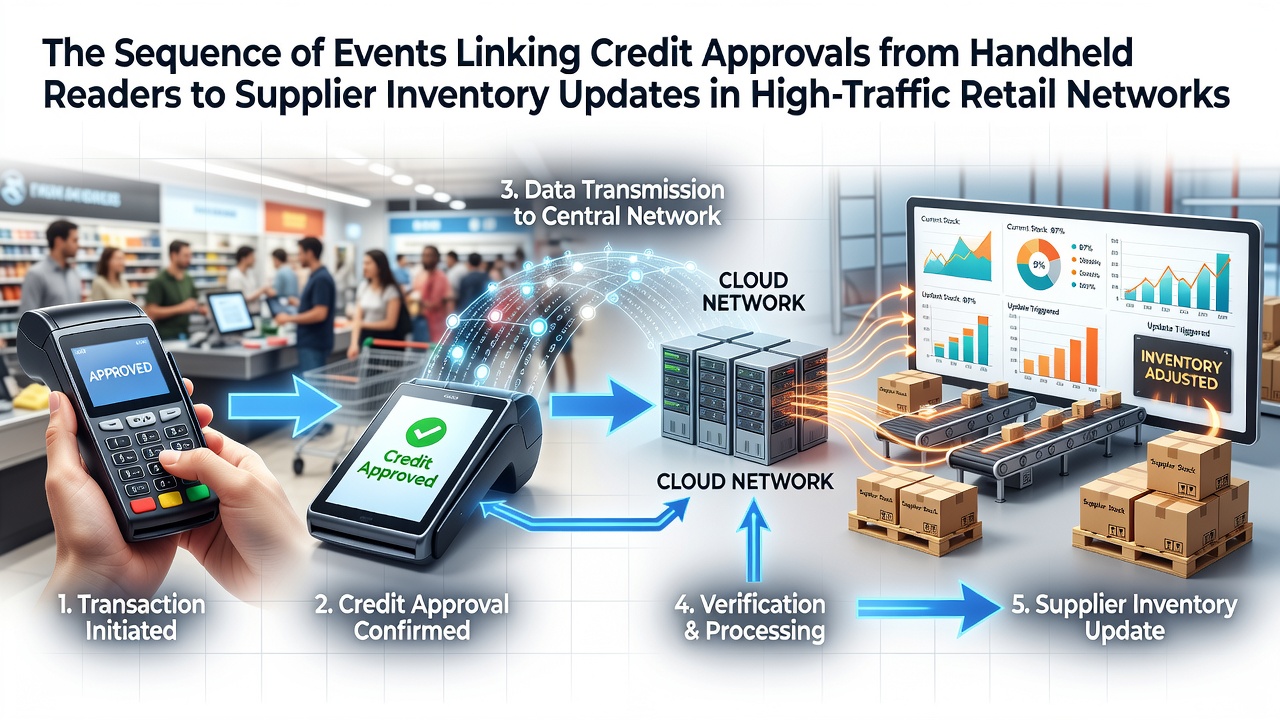 The flow of information begins when a customer presents a card or mobile device at a handheld reader during peak shopping hours, and the device captures encrypted transaction details including amount, card data, and merchant identifier before sending them through wireless networks to an acquiring bank. This initial capture step occurs in milliseconds as staff move through aisles or service counters in crowded stores, and the reader applies basic validation checks to confirm the card format and transaction limits before transmission. Next comes the authorization request, which travels from the handheld unit to payment processors and card networks where approval decisions rely on real-time checks against available credit, fraud indicators, and account status. Data shows that high-traffic retail environments handle thousands of such requests per hour, with networks routing messages across multiple hops that include security tokens and timestamp markers to maintain order. Once approval arrives back at the handheld reader, the system generates a confirmation that updates the merchant's point-of-sale records, and this confirmation includes the authorization code along with settlement instructions that prepare the transaction for batch processing later in the day. Observers note that in environments like large department stores or grocery chains, these local updates happen almost instantly on the device itself while the sale receipt prints or displays on screen.
Data Pathways from Reader to Merchant Systems
After local confirmation, the approved transaction data moves from the handheld reader into the retailer's central server through secure application programming interfaces that aggregate multiple sales into structured files. These files contain line-item details such as product codes, quantities sold, and pricing information that directly tie each purchase to specific stock units. Research from payment industry groups indicates that synchronization intervals often range from seconds to several minutes depending on network load during busy periods.
Merchants integrate these updates with inventory management platforms so that stock levels adjust automatically as sales accumulate, and this adjustment prevents overselling while triggering reorder alerts when thresholds drop below set points. Take one logistics team that monitors real-time dashboards showing inventory across multiple store locations, where each approved handheld transaction contributes to the running totals that feed into supplier portals.
Transmission to Supplier Inventory Platforms
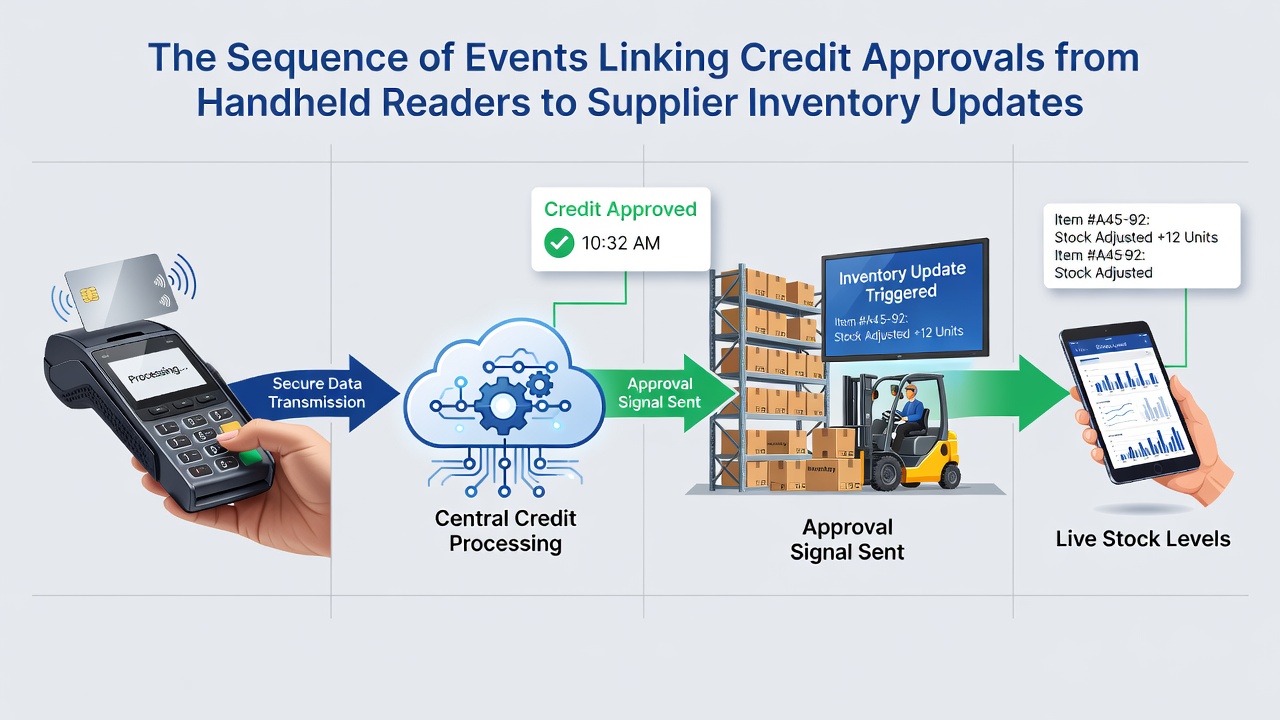
Supplier inventory updates follow once the merchant system pushes aggregated sales data through electronic data interchange connections or cloud-based APIs that connect directly to vendor databases. The sequence here involves mapping retail product identifiers to supplier stock keeping units, applying quantity deductions, and confirming receipt of the update through acknowledgment messages that travel back along the same pathway. Figures from supply chain studies reveal that these exchanges occur multiple times daily in high-volume networks to keep supplier records aligned with actual movement.
During June 2026, retail operators reported increased use of automated reconciliation tools that compare approved transaction volumes against inventory draws, and these tools flag discrepancies for review before they affect ordering cycles. The process incorporates timestamp verification so that each credit approval event links chronologically to the corresponding stock reduction at the supplier level.
Handling Peak Load and Error Recovery
High-traffic periods introduce challenges when network congestion delays messages, yet systems employ queuing mechanisms that store pending updates locally on the handheld reader or merchant server until connectivity restores. Error handling routines check for duplicate authorizations and resend only unconfirmed batches, which maintains accuracy across the entire chain from reader to supplier ledger. One case documented by logistics analysts showed how a mid-day outage resolved through automated retries that preserved the sequence without manual intervention.
Compliance requirements add another layer as data encryption standards and access controls govern every hop, and these requirements ensure that card details never appear in plain text within inventory records. Industry reports from organizations such as the European Central Bank outline protocols that retail networks follow to meet these security benchmarks while supporting rapid data flow.
Integration Points and Feedback Loops
Feedback loops close the sequence when suppliers confirm updated inventory positions back to the retailer, allowing for dynamic adjustments like promotional pricing on remaining stock or expedited replenishment orders. These confirmations often arrive through the same API channels and trigger notifications to store managers when quantities reach critical levels. Analysts observe that successful integration depends on standardized data formats that both merchant and supplier systems recognize without additional translation steps.
Additional examples include grocery chains that link handheld scanner approvals directly to warehouse management software, where each sale deducts items from supplier-held reserves rather than on-site storage. Such setups reduce holding costs while ensuring continuous availability during seasonal surges.
Conclusion
The complete sequence demonstrates how credit approvals originating at handheld readers propagate through authorization networks, merchant servers, and supplier platforms to maintain synchronized inventory across high-traffic retail operations. Each stage builds on the previous one with verification steps that preserve data integrity from the moment of sale through final stock adjustment. Retail networks continue to refine these pathways through standardized protocols and automated checks that support growing transaction volumes without disrupting service continuity.