Tokenization's Influence on Data Security Protocols Within Multi-Currency Merchant Account Operations for Global Retail Networks
Written by Jakob Schmitz · Aug 2, 2026
Tokenization's Influence on Data Security Protocols Within Multi-Currency Merchant Account Operations for Global Retail Networks
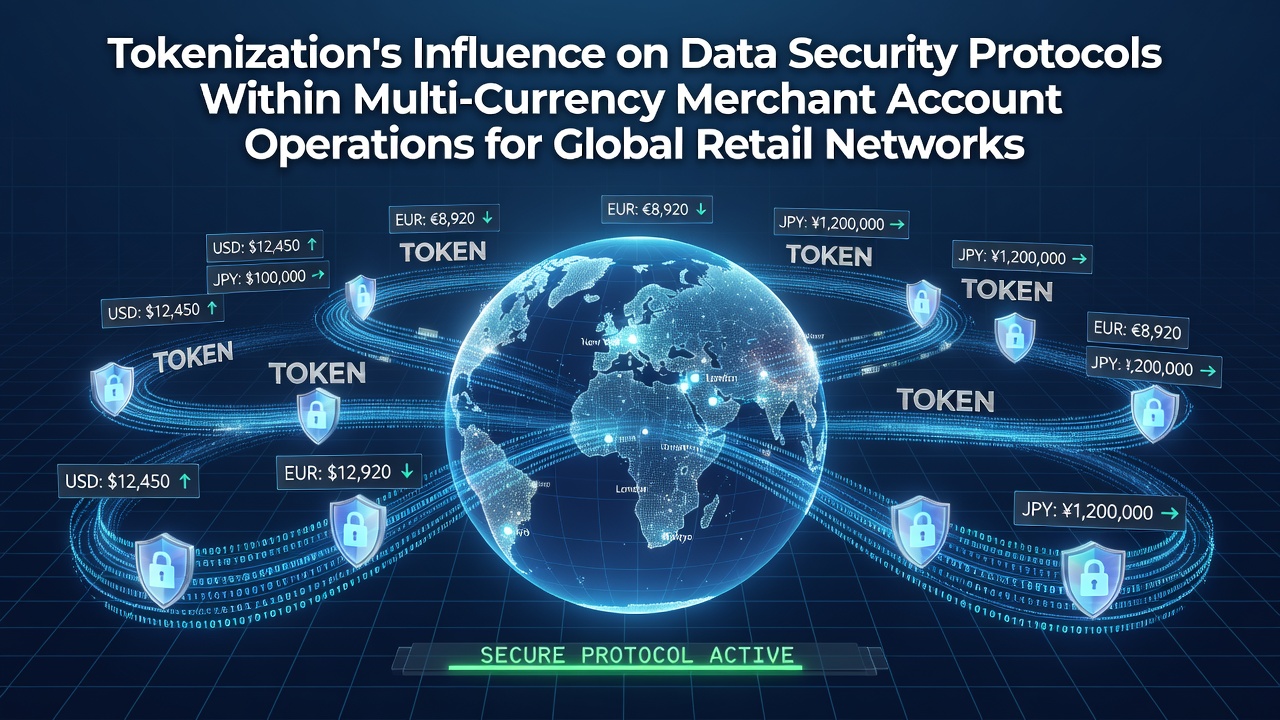
Tokenization replaces sensitive payment card data with unique identifiers that hold no intrinsic value, and this substitution directly shapes how data security protocols operate inside multi-currency merchant accounts that serve global retail networks. Researchers at institutions studying payment infrastructure have documented that the method limits the scope of data that travels across borders during currency conversion and settlement steps, while organizations such as the PCI Security Standards Council track its adoption across different regions.
Core Mechanics of Tokenization in Cross-Border Processing
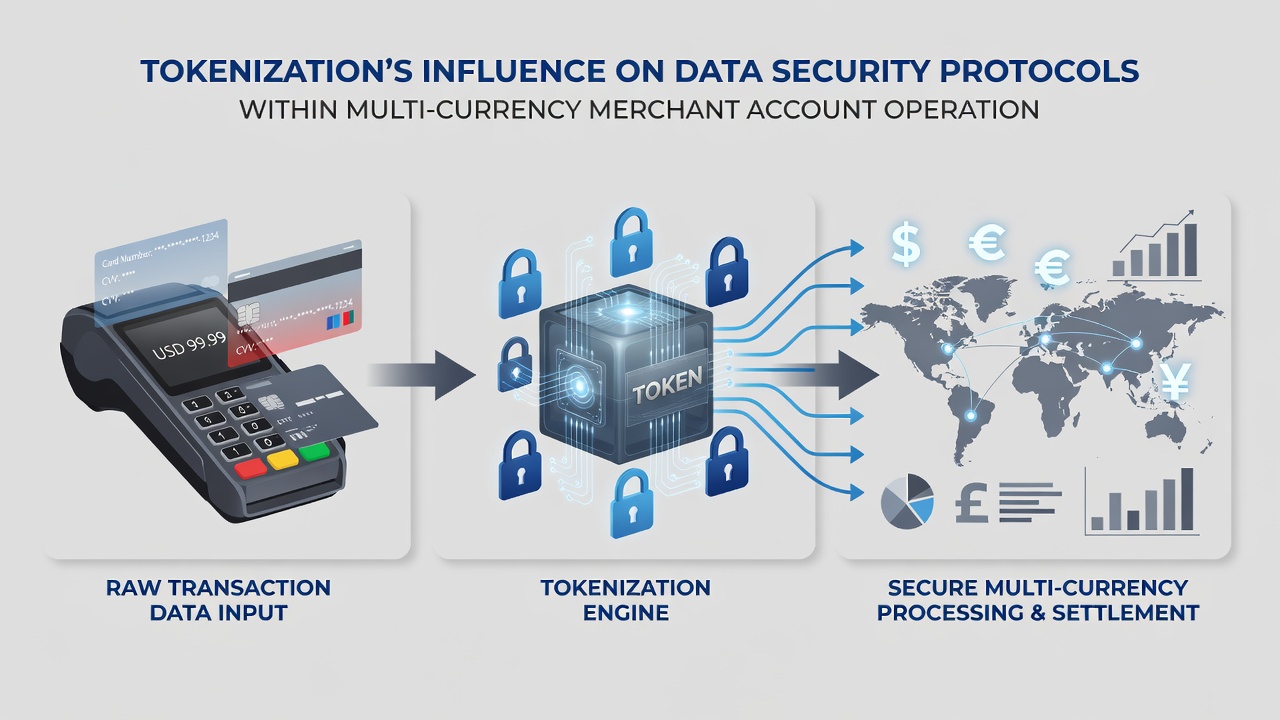
Multi-currency merchant accounts must manage exchange rate calculations, local compliance rules, and real-time authorization requests from retail locations spread across continents, and tokenization inserts a layer that detaches actual card numbers from these operational sequences. When a transaction originates in one currency and settles in another, the token travels through the network while the original data remains stored in a secured vault managed by the token service provider. Studies published by academic groups focusing on financial systems show that this separation reduces the number of systems that require full PCI DSS scope, because tokens fall outside the definition of cardholder data.
Protocol Adjustments Observed in Global Retail Operations
Security protocols inside these merchant accounts now incorporate token lifecycle management steps that include issuance, rotation, and revocation procedures tailored to currency-specific risk profiles. Observers note that protocols must accommodate varying data residency laws, since some jurisdictions require tokens generated for transactions in their currency to remain under local control. As of August 2026, regulatory updates in several markets have prompted merchant acquirers to document token mapping procedures more explicitly during compliance audits, and this documentation requirement has influenced how networks synchronize security logs across multiple time zones.
Integration Points with Existing Encryption and Access Controls
Encryption continues to protect data in transit and at rest, yet tokenization changes the points at which decryption occurs and therefore alters key management schedules. In practice, a global retail network processing sales in euros, yen, and dollars can route tokenized requests through regional gateways that apply localized access rules without ever exposing primary account numbers. Data from industry reports indicate that organizations adopting this model experience fewer instances where full card details appear in system logs during high-volume periods, because the token identifier serves all downstream reconciliation tasks.
Operational Examples Across Retail Networks
One documented implementation involves a network of stores operating in twelve countries that replaced card data with tokens at the point of sale terminal. Currency conversion then occurred using only the token and associated metadata, while the actual card number stayed within a single vault location. Research teams examining similar deployments report that audit trails became shorter and easier to segment by currency jurisdiction, because each token carried metadata flags that identified its originating region and allowed automated routing decisions without additional data exposure.
Challenges in Maintaining Consistent Security Standards
Differences in token format standards across payment schemes create friction when a single merchant account must accept tokens from multiple networks, and protocol teams address this by maintaining mapping tables that translate between formats while preserving the non-sensitive nature of the identifiers. Network latency can increase when token validation requires an extra hop to a centralized service, although many providers now deploy distributed token vaults to keep response times comparable to legacy processes. Figures from research papers on payment security show that the added step remains measurable in milliseconds rather than seconds under normal load conditions.
Conclusion
Tokenization continues to redefine the boundaries of data security protocols within multi-currency merchant account operations by limiting the circulation of sensitive card information across global retail networks. The approach integrates with existing encryption methods, supports compliance with region-specific regulations, and requires careful management of token lifecycles to maintain operational efficiency. As networks expand into additional markets, the documented effects on protocol design and audit procedures provide measurable indicators of how security responsibilities shift when actual card data no longer moves through every processing stage.