23 Jun 2026
Tracing Cash Flow Links Between Handheld Terminals and Central Ledgers in Crowded Market Seasons
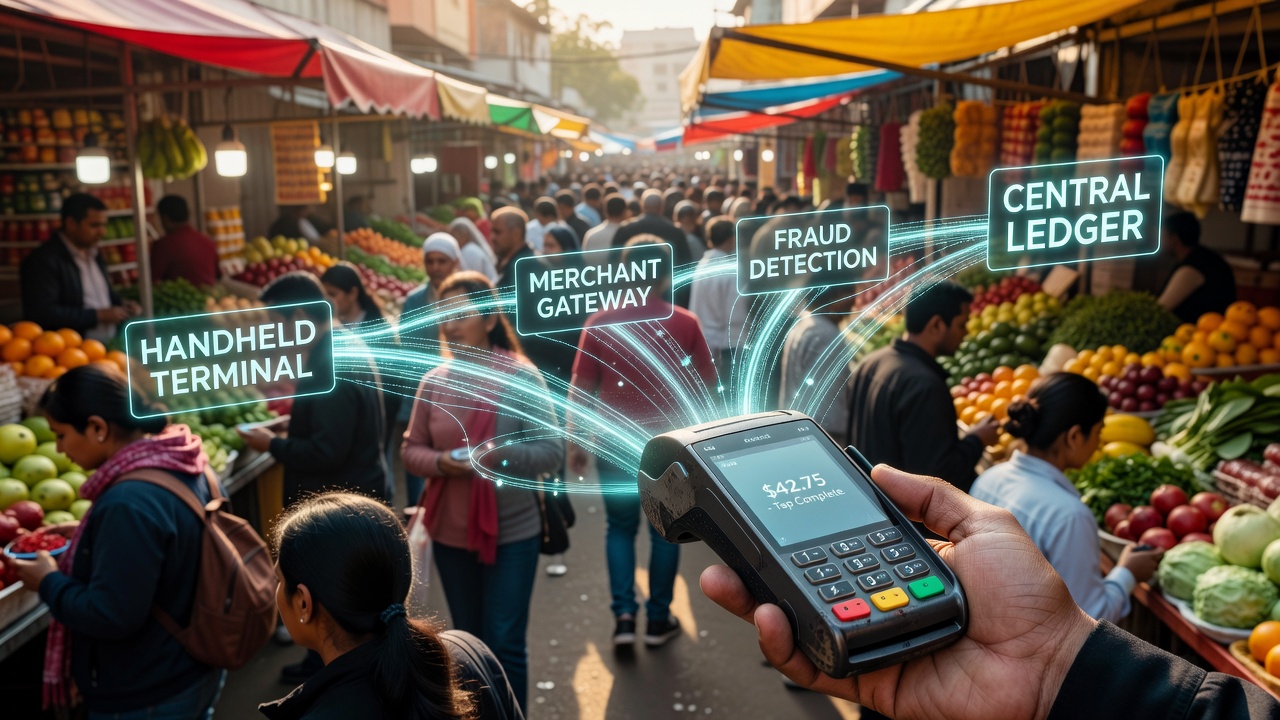
Handheld terminals capture transaction data at the point of sale and route it through multiple network layers before the figures reach central ledgers, and this pathway becomes especially visible when market volumes surge during crowded retail periods such as the summer sales cycles expected in June 2026.
Data Capture at Portable Devices
Merchants operate handheld units that record sale amounts, item identifiers, and payment method details in real time, while built-in encryption protocols protect each entry before transmission begins. Observers note that these devices often connect via cellular or Wi-Fi networks to payment processors, and the initial data packets carry timestamps that later help reconcile entries against bank records. Research from payment system analyses shows that terminals in high-traffic environments generate thousands of records per hour, creating dense streams that require efficient routing to avoid bottlenecks.
Transmission Pathways to Processors
Once captured, transaction information travels to acquiring banks or third-party processors through secure gateways, and these intermediaries validate authorization requests against issuer databases before approving or declining each charge. Data indicates that during peak market seasons the volume of authorization messages can increase by factors of three to five compared with average days, which places added load on both network capacity and verification systems. Processors then generate response codes that travel back to the handheld units, completing the immediate customer interaction while simultaneously logging details for later settlement cycles.
Reconciliation with Central Ledgers
Settlement files containing aggregated transaction totals move from processors into merchant accounts at financial institutions, and automated reconciliation routines match these totals against the original terminal records stored in central ledgers. Those who've studied transaction flows point out that discrepancies often arise from network latency or partial authorizations, prompting exception-handling procedures that flag items for manual review. According to reports issued by the European Central Bank, accurate ledger updates depend on synchronized batch processes that typically run overnight, ensuring that daily cash positions reflect the previous day's activity without residual delays.
Handling Volume Spikes in Crowded Seasons
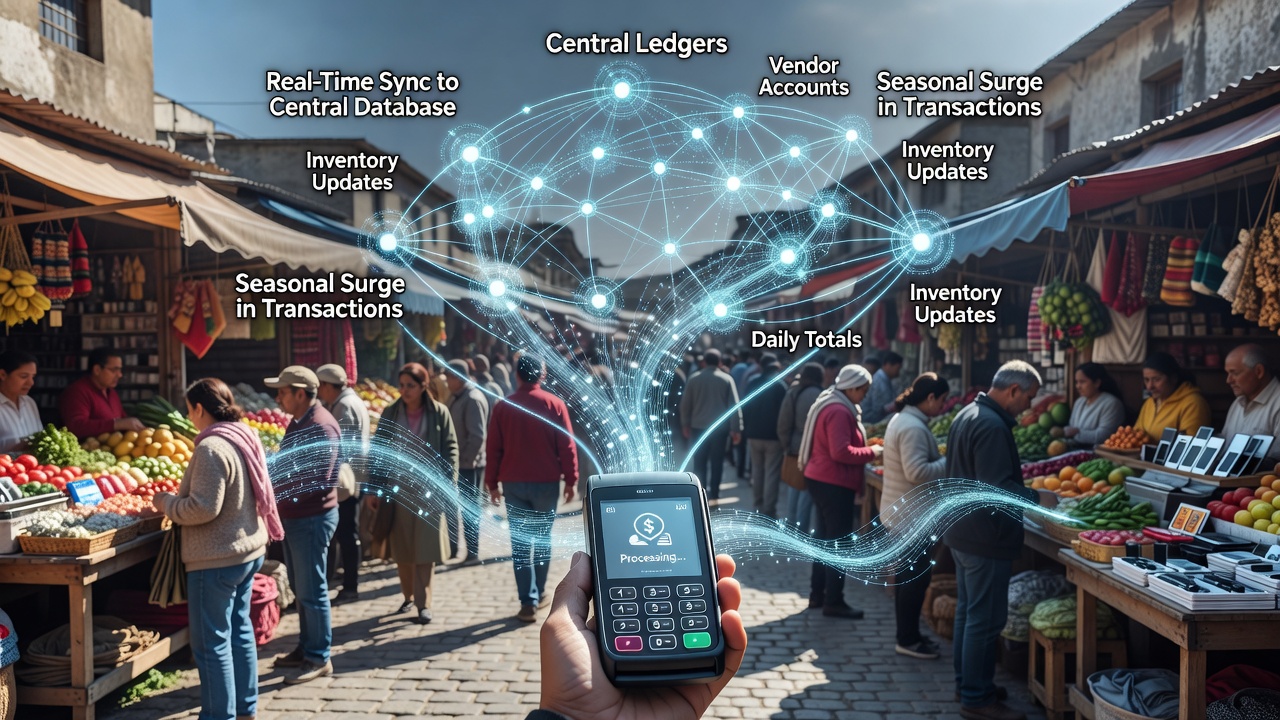
Market seasons characterized by dense foot traffic place particular strain on the entire cash-flow chain, and system operators respond by scaling server resources and implementing queue-management protocols at the processor level. Figures from industry monitoring groups reveal that terminals deployed at outdoor festivals or large retail events in June periods transmit data at accelerated rates, requiring fallback mechanisms such as store-and-forward capabilities when connectivity dips momentarily. These mechanisms hold encrypted records locally until links restore, after which the devices forward the backlog in chronological order to maintain ledger integrity.
Role of Timestamping and Audit Trails
Each transaction record includes precise timestamps generated by the handheld terminal's internal clock, and these markers enable auditors to trace the exact sequence from device capture through processor approval to final ledger posting. Studies conducted by university research teams have examined how minor clock drift across distributed terminals can create apparent mismatches that disappear once time-zone adjustments and network delays receive proper accounting. Central ledgers therefore incorporate tolerance windows during matching routines, allowing automated systems to align entries that differ by only a few seconds without triggering alerts.
Integration with Inventory and Reporting Systems
Many merchants link handheld terminal outputs directly to inventory management platforms, and this integration produces simultaneous updates that reduce the lag between sale completion and stock-level adjustments. Data from retail technology deployments shows that such linkages prove especially useful when daily volumes climb, because real-time depletion tracking prevents overselling during flash sales or limited-stock promotions. Central ledgers receive enriched data feeds that combine payment amounts with product codes, creating unified records that support both financial reporting and operational planning without separate manual uploads.
Regulatory and Compliance Considerations
Payment networks must satisfy data-protection standards set by regional authorities, and compliance documentation often requires detailed logs that demonstrate unbroken chains from terminal to ledger. The Australian Payments Network publishes guidelines that emphasize end-to-end visibility for high-volume periods, encouraging operators to retain intermediate processor logs for audit periods that extend several years. Merchants who maintain these records find that regulatory examinations proceed more smoothly because every authorization step can be reconstructed from the original device output through to the final bank entry.
Conclusion
Tracing cash flow from handheld terminals to central ledgers involves a sequence of capture, transmission, authorization, settlement, and reconciliation steps that operate continuously, and these steps become most evident when market activity intensifies. Accurate timestamping, scalable processing capacity, and integrated inventory links all contribute to reliable record-keeping, while regulatory frameworks reinforce the need for transparent audit trails. Observers who examine these systems during crowded seasons such as those anticipated around June 2026 continue to document how incremental improvements in network reliability and data synchronization reduce reconciliation errors across the entire payment chain.