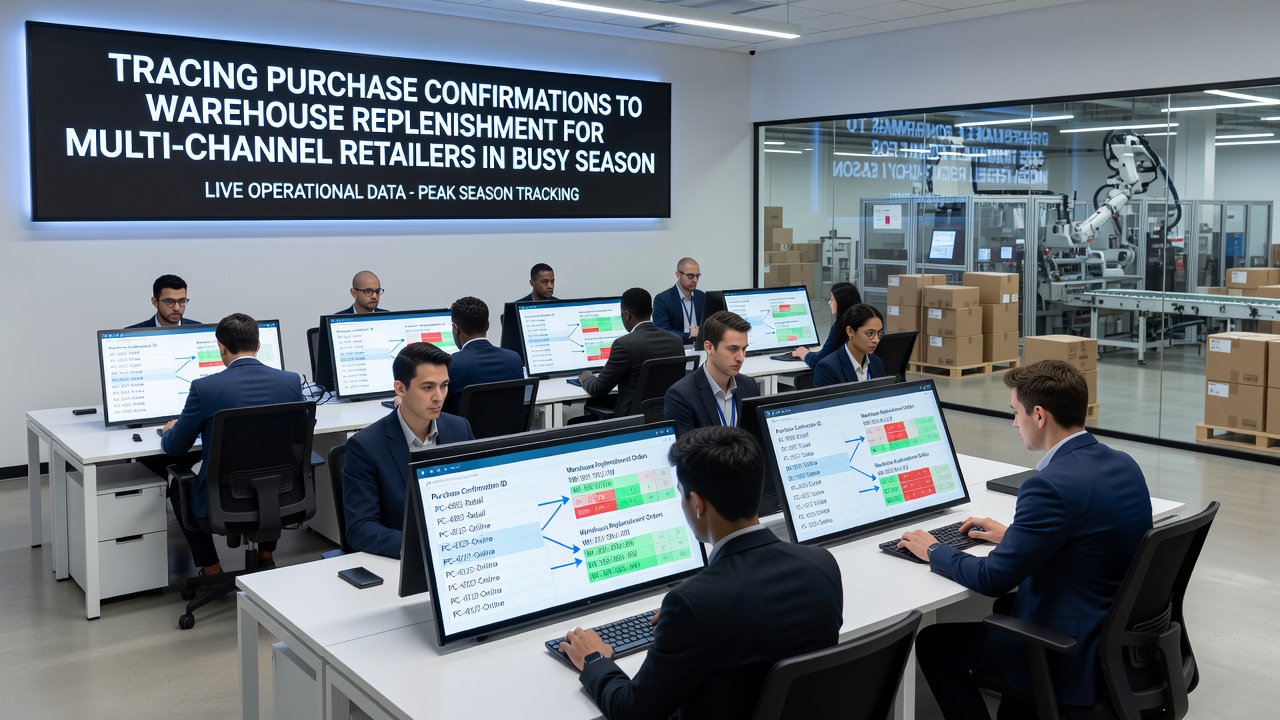
Tracing Purchase Confirmations to Warehouse Replenishment for Multi-Channel Retailers in Busy Seasons
Written by Uma Vogel · Aug 25, 2026
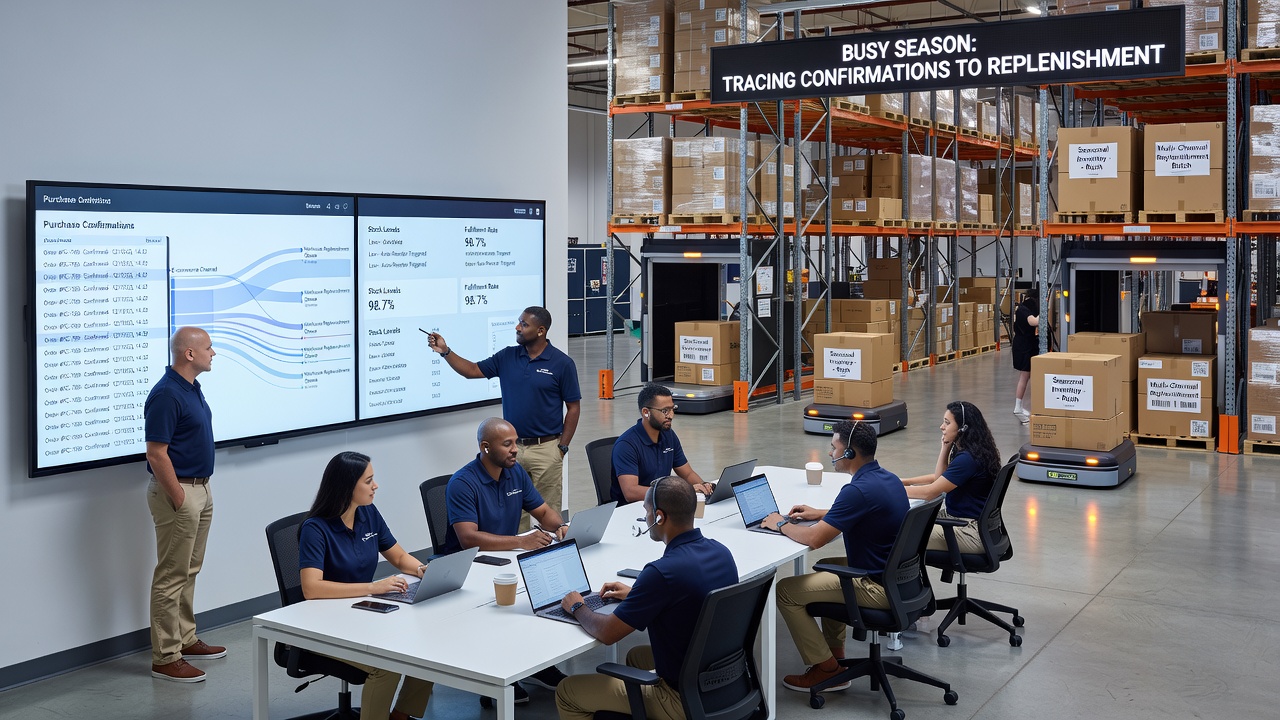
Tracing Purchase Confirmations to Warehouse Replenishment for Multi-Channel Retailers in Busy Seasons
Multi-channel retailers operate across online platforms, physical stores, and mobile applications where purchase confirmations serve as the initial trigger that sets warehouse replenishment processes in motion. Sales data from these varied sources flows into centralized inventory management systems that monitor stock levels in real time, and during busy seasons such as the weeks leading into August 2026 back-to-school promotions retailers rely on automated alerts to initiate restocking before shortages occur. The sequence begins when a customer completes a transaction and the confirmation record captures details including product identifiers, quantities, and channel origin before these records integrate with warehouse management software. Systems analysts have documented how enterprise resource planning platforms aggregate confirmation data from disparate channels to calculate reorder points based on historical velocity and forecasted demand spikes. In practice this means that a confirmation from an e-commerce order placed at 2 a.m. updates the same dashboard used by store associates who scan shelf gaps during afternoon shifts, and the unified view allows procurement teams to issue purchase orders to suppliers without waiting for manual reconciliation at the end of each day. Research from industry reports shows that synchronized data pathways reduce the lag between sale and restock request from several hours to under thirty minutes in high-volume environments.Data Integration Across Retail Channels
Purchase confirmations carry structured information that warehouse systems parse to determine whether incoming stock should go to a regional distribution center or directly to a store location. Multi-channel setups often employ application programming interfaces that push confirmation feeds into warehouse execution systems while pulling current inventory snapshots back to sales platforms. Observers note that this bidirectional exchange prevents overselling and supports accurate promise dates shown to customers during checkout. Retail operations during peak periods generate confirmation volumes that can exceed normal daily figures by 300 percent according to figures from the US Census Bureau retail trade reports. Those spikes test the capacity of integration layers because each channel may use different data formats yet all must map to a common product master file. Technicians configure middleware to normalize these inputs so that a mobile app sale of a specific SKU registers identically to an in-store point-of-sale transaction in the replenishment queue.Replenishment Triggers and Timing
Warehouse replenishment activates once confirmation records cross predefined thresholds within the inventory system. Algorithms evaluate remaining units against expected future sales derived from confirmation trends over the preceding days or weeks. When thresholds are breached the system generates work orders that direct pickers to assemble pallets for outbound shipment to stores or fulfillment centers. The process accelerates during busy seasons because demand signals arrive continuously rather than in batches. A single large confirmation batch from an online flash sale can initiate multiple supplier orders simultaneously while internal transfers move existing stock to high-velocity locations. Data shows that retailers maintaining these automated sequences experience fewer stockouts than those relying on periodic manual reviews.