Tracing the Invisible Threads Between In-Store Purchases and Warehouse Restocking Timelines
Written by Rosa Hansen · Jul 19, 2026
Tracing the Invisible Threads Between In-Store Purchases and Warehouse Restocking Timelines
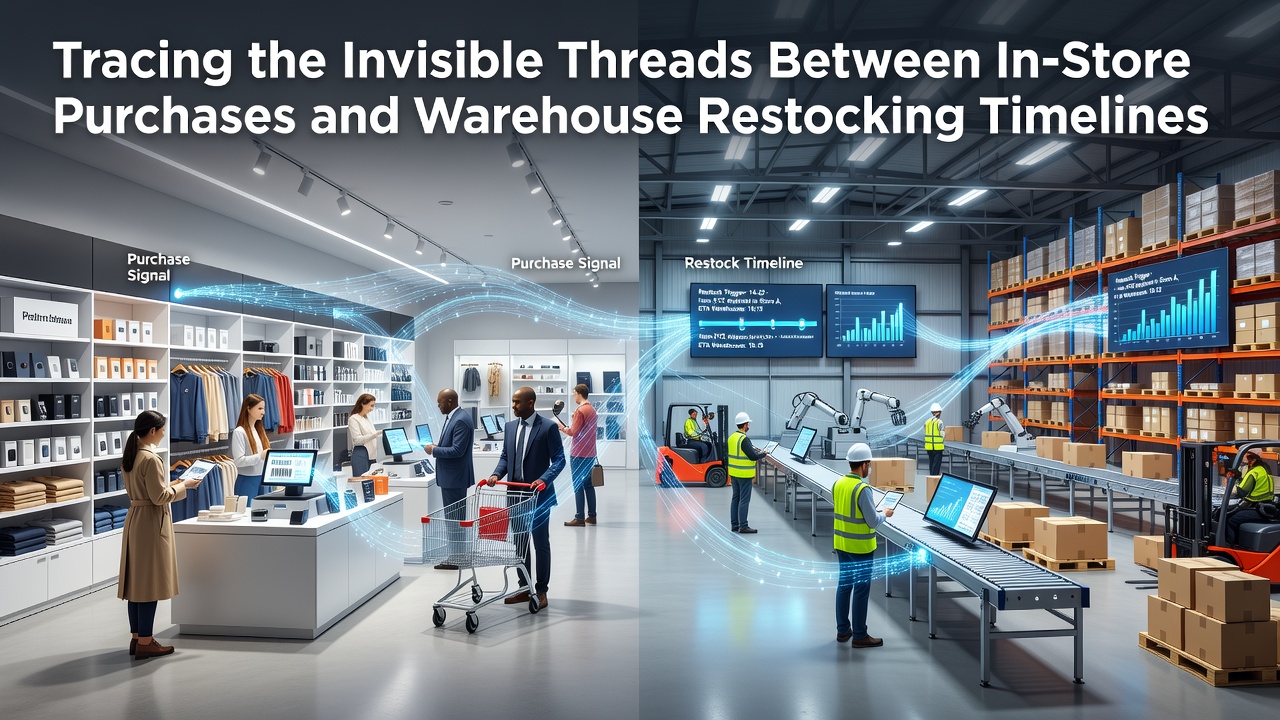
Retail operations depend on precise coordination between customer transactions at physical locations and the replenishment cycles managed at distribution centers. Point-of-sale systems capture each purchase in real time, and those records feed directly into inventory management platforms that calculate depletion rates across product categories. When a transaction occurs, the data packet includes item identifiers, quantities, timestamps, and location codes. These elements travel through middleware layers that update master stock files before triggering threshold alerts for warehouse teams.Data Pathways Linking Retail Floors to Distribution Centers
Enterprise resource planning software serves as the central hub where sales information merges with existing stock levels. Algorithms assess velocity metrics for each SKU, comparing current movement against historical patterns recorded over previous weeks or months.
Observers note that integration points between cash registers and warehouse management systems often rely on standardized APIs, which allow batch or continuous data exchange depending on network capacity. In high-volume periods, continuous feeds reduce the lag between purchase and restock signals from hours to minutes.
Research from the National Retail Federation indicates that synchronized systems cut average out-of-stock incidents by measurable percentages during seasonal peaks. Warehouse planners receive updated demand forecasts that incorporate not only sales volume but also return rates and promotional lift data pulled from the same transaction stream.
Technology Enabling Synchronization Across the Supply Chain
Radio-frequency identification tags and barcode scanners at receiving docks confirm incoming shipments against the same inventory ledger that tracks floor-level deductions. This closed loop prevents discrepancies that once required manual reconciliation cycles lasting several days.
By July 2026 many mid-sized retailers had deployed edge computing nodes inside stores, allowing preliminary data validation before packets reach central servers. Those nodes apply basic demand-smoothing rules locally, which then refine the broader restocking schedules generated at regional warehouses.
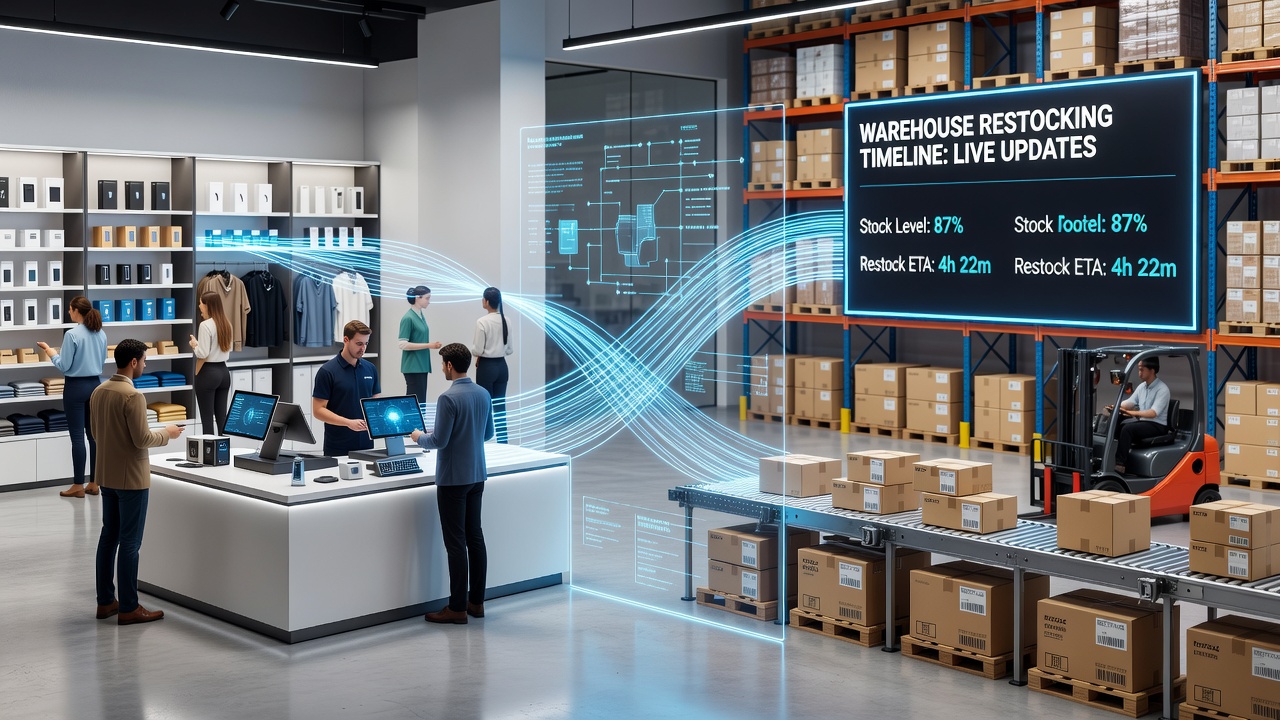
Automated guided vehicles inside fulfillment facilities follow pick lists generated from the same data models. Route optimization software adjusts pallet movements based on incoming sales signals, shortening the interval between order release and truck departure.
Forecasting Models and Timeline Adjustments
Machine-learning models ingest multi-week sales histories alongside external variables such as weather patterns and local events. The resulting probability distributions inform safety-stock calculations that warehouses maintain for each product class.
One logistics provider documented a 22 percent reduction in expedited freight costs after linking store-level point-of-sale feeds to its replenishment engine. The adjustment shortened average lead times from 48 hours to 31 hours for fast-moving goods during tested quarters.
Analysts at Statistics Canada have tracked similar patterns across Canadian retail chains, noting that tighter data integration correlates with steadier employment levels at distribution centers because overtime spikes become more predictable.
Operational Examples Across Different Retail Formats
Supermarket chains process thousands of daily transactions per location, requiring sub-hourly inventory snapshots. Their warehouse partners receive rolling forecasts updated every 15 minutes during weekday rushes.
Specialty apparel retailers, by contrast, operate with longer replenishment windows yet still rely on the same core data flow to align markdown schedules with remaining warehouse quantities. Both formats demonstrate that the underlying thread remains the continuous translation of sales events into actionable restock orders.
European studies published through the OECD retail working group highlight parallel efficiencies gained when cross-border distribution networks adopt unified data standards for inventory messages.
Conclusion
The connection between in-store purchases and warehouse restocking operates through layered information systems that convert transaction records into replenishment directives. Accuracy at each transfer point determines how closely actual stock movement matches customer demand. Continued refinement of these linkages, supported by expanding sensor networks and standardized protocols, sustains the operational rhythm that keeps shelves supplied without excess accumulation at any stage of the chain.